


Atlas Stone Technique — The Complete Guide to Strongman's Most Iconic Event
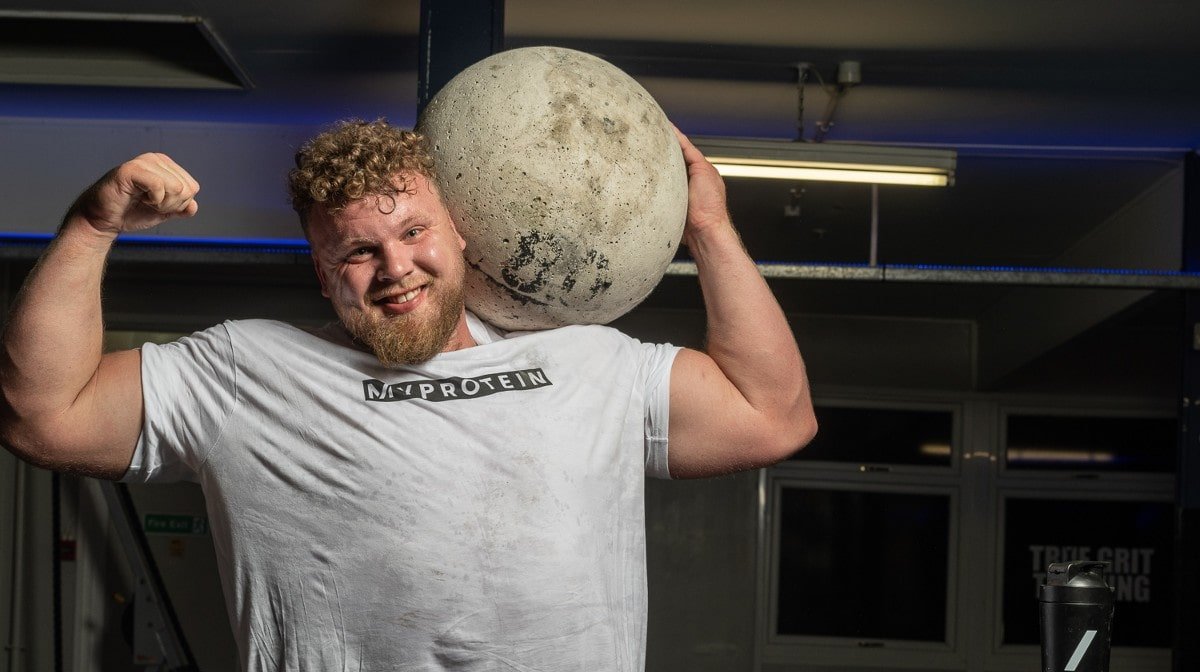
If there is one image that defines strongman competition in the public consciousness, it's the Atlas Stone. Round concrete balls ranging from 100 pounds to over 400 pounds, loaded onto platforms at speed, by athletes who make it look almost effortless until you're standing next to one and trying to do it yourself.
The Atlas Stone series has closed World's Strongest Man competitions since 1986. It closes Strongman Corporation Nationals at the North Texas Strength Expo in Mesquite, Texas. It is the event that crowds gather around, that produces the loudest reactions at every competition, and that asks more of its competitors than almost any other test in the sport.
This guide covers everything you need to know about Atlas Stone technique — the mechanics, the common mistakes, how to train it, and what you're watching when you see elite athletes load stones at national championship weight.
What Are Atlas Stones?
Atlas Stones are smooth, spherical concrete weights used in strongman competition. Competition sets typically feature five stones of progressively increasing weight — a loading series where each stone must be lifted from the ground and placed on a platform at a specific height within a time limit.
The stones range in size from roughly 16 inches in diameter (lighter competition weights) to over 20 inches for the heaviest stones at elite competition. Their smooth surface is what makes them distinctive — there are no handles, no edges, nothing to grip. The athlete must hold the stone entirely through the friction of their forearms and chest against its curved surface.
Competition stone weights at Strongman Corporation Nationals vary by weight class and event programming, but a national-level men's open loading series might begin at 200 pounds and progress to 350+ pounds for the final stone.
The Core Technique — Three Phases
Atlas Stone loading happens in three distinct phases: the pickup from the ground to the lap, the lap position, and the extension to the platform.
Phase 1 — The Pickup (Ground to Lap)
Setup: Stand directly over the stone with feet slightly outside shoulder width. Bend into a deep squat position with hips low, chest against the stone, and arms reaching around the lowest circumference of the stone where they can make contact with the ground or near it.
The grip: Your hands are positioned on the underside of the stone with fingers pointed toward the ground and palms pressing into the stone's surface. This creates friction between your forearms and the stone's surface — the primary contact point.
The pickup: Drive through the legs while simultaneously pulling the stone into your body. The stone should contact your lower abdomen and hips as it leaves the ground, not your hands alone. As your legs extend, the stone rises into the lap position.
Phase 2 — The Lap Position
The lap position is the intermediate checkpoint of every successful stone load. With the stone sitting against your thighs and lower abdomen — in the cradle created by your bent-leg position — you establish the grip adjustment needed for the final extension.
In the lap, your arms go from wrapped-around-and-under to clasped on top of the stone. Many athletes use tacky — a sticky resin substance — on their forearms and occasionally wrists to increase friction. If tacky is available and permitted in the event, use it; a stone loaded with tacky is significantly more controllable than one loaded without it.
The lap is not a rest position. It's a dynamic transfer point. Pause long enough to adjust your grip and prepare for the extension — not long enough for the stone to lose the momentum from the pickup.
Phase 3 — Extension to the Platform
From the lap position, drive your hips forward explosively while extending your upper body upright and pushing the stone onto the platform. The platform height determines how much extension is needed — a lower platform allows the stone to roll onto it from the lap; a higher platform requires the stone to be driven up the chest to shoulder height before tipping over the edge.
For maximum height loads: as the stone rises up the body during the extension, your hips drive forward and your chest drives upward simultaneously. At the moment the stone reaches platform height, your body is fully extended with the stone pressing against your upper chest before tipping over the platform lip.
Common Mistakes and How to Fix Them
Starting too far from the stone. Athletes who set up with their feet too far from the stone create a long moment arm that requires more upper body strength for the initial pickup. Setup directly over the stone — feet close, hips low.
Skipping the lap. Some athletes try to load stones directly from the ground to the platform without establishing the lap position, using a swinging motion to generate momentum. This works on lighter stones in competition-fatigued conditions but is significantly less efficient at maximum competition weight. Train the lap specifically.
Losing the stone off the side. Happens when the stone escapes to one side during the extension phase, usually because one arm is dominating the movement asymmetrically. Focus on equal pressure from both arms and keeping the stone centered against the body throughout the extension.
Not using tacky. When tacky is permitted (standard at most Strongman Corporation events), not using it is leaving performance on the table. The friction improvement is significant, particularly on the heaviest stones in a loading series.
Training Atlas Stones
Start light. The ego wants to load the heaviest stone immediately. The technique wants to start at a weight that allows focus on the lap mechanics and extension timing. Begin at 60% of your target competition weight and build progressively.
Train with different height platforms. Stone loading height varies by competition event programming. Practice loading to multiple heights — waist high, chest high, overhead — so no platform height is a surprise on competition day.
Train the lap specifically. Spend entire sessions just working the ground-to-lap transition before you worry about the full load. The lap position is where most failed stones originate — specifically in athletes who rush it or who haven't developed the specific hip and core positioning the lap requires.
Train without tacky sometimes. Tacky dependence can mask grip weakness that becomes a problem if tacky isn't available or if your supply runs out mid-competition. Include some stone sessions without tacky to build the underlying friction grip.
Watch the Atlas Stone Series Live
The Atlas Stone loading series at Strongman Corporation Nationals at the North Texas Strength Expo produces the event's most electric crowd moment. The competition floor gathers. The crowd compresses around the stone platform. The final stone in the series — the heaviest, the one with everything on the line — produces a silence before and an explosion after that is the defining experience of live strongman spectating.
Come to the North Texas Strength Expo in Mesquite and be in the room when it happens.

See the Atlas Stones at the national stage — live at the NTX Strength Expo in Mesquite TX.Get your tickets at ntxstrengthexpo.com



Find Us On
.svg)

.svg)