


How Strength Sports Make You a Better Athlete in Every Sport You Play
Most athletes treat strength training as a support tool — something you do in the off-season to build the base for your real sport. You lift weights so you can run faster, throw harder, jump higher, or last longer on the court or field. The strength work is always secondary to the sport you actually identify with.
What if that framework is completely backward?
The physical qualities developed through serious engagement with strength sports — powerlifting, strongman, HYROX, arm lifting, and team-based fitness competition — aren't just supplementary. They're foundational to athletic performance in ways that most athletes from traditional sports backgrounds have never fully explored. And athletes who have crossed over from conventional sports into strength sports consistently say the same thing: they became better at everything.
This isn't a pitch to abandon your sport. It's an argument for understanding what strength sports actually develop — and why seeing them up close at the North Texas Strength Expo in Mesquite might be one of the most useful things you do for your athletic development this year.
What Strength Sports Actually Train
Before getting into the transfer effects, it's worth being specific about what different strength sports develop — because the answer is broader than most athletes from conventional sports backgrounds expect.
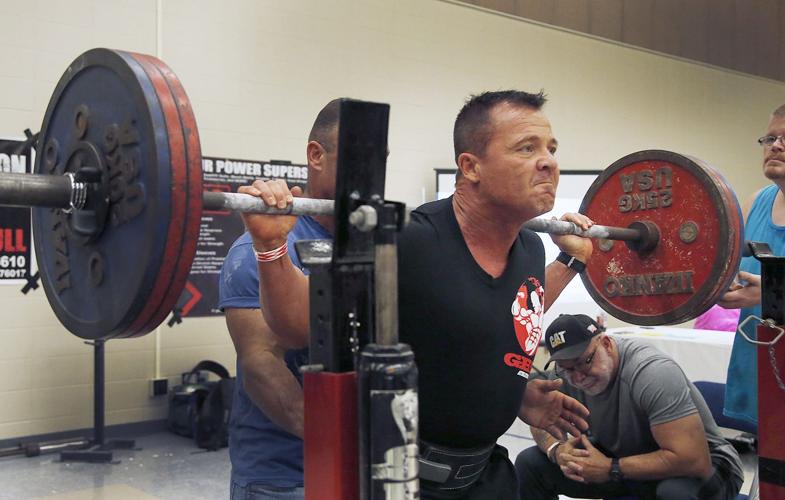
Powerlifting develops maximal strength in three fundamental movement patterns: the squat, hip hinge, and horizontal press. These are the movement patterns that underlie almost every athletic action — jumping, sprinting, throwing, hitting, and changing direction all depend on force production in these exact patterns. Powerlifters develop the neuromuscular recruitment, connective tissue strength, and technical proficiency in these movements that most athletes from other sports never fully access.
Strongman develops multi-modal strength-power across an enormous range of movement patterns and implements. Overhead strength, loaded carries, explosive pulling, and sustained power output across multiple events build the kind of general physical preparedness that transfers broadly to any athletic demand. Strongman athletes develop what coaches call "odd-object strength" — the ability to apply force to things that don't cooperate the way a barbell does — which has direct parallels to the unpredictable physical demands of contact sports, manual labor, and real-world athletic situations.
HYROX develops strength-endurance and cardiovascular capacity simultaneously — the specific combination that most field sports demand but most training programs develop separately. An athlete who can sustain effort across eight demanding workout stations separated by running intervals has built exactly the physiological foundation that combat sports, team sports, and endurance athletics require.
Arm Lifting and grip strength training develop the crushing grip, pinch grip, and support grip endurance that translate to every pulling movement in every sport. Rock climbers, martial artists, baseball pitchers, football linemen, and tennis players all have grip strength as a critical performance variable — and almost none of them train it with the specificity that competitive arm lifters bring to it.
The Transfer to Running and Endurance Sports
This is the transfer effect that surprises most endurance athletes: strength sports make you faster and more resilient as a runner, cyclist, or endurance competitor in ways that adding more endurance volume alone cannot replicate.
Running economy improves with strength. Running economy — how efficiently your body uses oxygen at a given pace — improves significantly when athletes add heavy strength training to their endurance programs. Research consistently shows that lower body maximum strength, particularly in the squat and hip hinge patterns that powerlifting develops, correlates strongly with running economy improvements. Stronger legs produce more force per stride with less effort, directly translating to faster paces at the same perceived effort level.
Injury resilience is a strength sport specialty. The connective tissue adaptations that come from progressive heavy loading in powerlifting and strongman training — stronger tendons, ligaments, and joint structures — are exactly what endurance athletes lack when overuse injuries accumulate. Runners who add serious strength training to their programs consistently report reduced injury frequency, not because they're doing less running, but because their tissue has become more robust.
HYROX is the direct crossover. For athletes from endurance backgrounds, HYROX is the most immediately relevant strength sport — it demands real running fitness while incorporating muscular endurance challenges that expose the strength deficits that pure endurance training creates. The sled push, farmer's carry, and sandbag lunges at HYROX stations specifically target the muscular weaknesses that endurance athletes typically carry, creating a training and competition environment that addresses exactly what's missing from a running-focused program.
The Transfer to Team Sports
Football, basketball, soccer, rugby, lacrosse, hockey — every major team sport has strength, power, and physical durability as performance-limiting factors. The strength sports represented at the North Texas Strength Expo develop these qualities with a specificity and intensity that general weight training in a commercial gym rarely approaches.
Strongman training builds the specific physical qualities team sport athletes need most.
The farmer's carry develops bilateral grip strength, core stability, and the ability to generate force while moving — directly transferring to a running back with the ball, a basketball player fighting through contact, or a soccer player maintaining possession under physical pressure.
The yoke carry develops the posterior chain strength and core stiffness under load that underpins tackling power, blocking strength, and the physical dominance that separates athletes at the contact level.
The log press and overhead work that strongman athletes develop create the shoulder stability and pressing strength that quarterbacks, swimmers, baseball pitchers, and volleyball players need — with the added demand of odd-object balance that makes the training stimulus more complete than a standard barbell press.
Powerlifting builds the force production foundation.
The squat depth that Powerlifting America standards require — full depth, controlled, under maximum load — builds the posterior chain and leg strength that underpins explosive jumping, sprint acceleration, and direction change. Athletes who can squat 400+ pounds to full depth with technical precision have a strength foundation that virtually guarantees athletic performance improvements across team sports when that strength is channeled into sport-specific movement.
The Transfer to Combat Sports
If there is one athletic domain where strength sports transfer most directly and most completely, it is combat sports.
Wrestlers, judoka, MMA fighters, and boxers all perform at the intersection of grip strength, positional power, explosive force production, and physical endurance under stress — which is also the exact intersection where strongman, powerlifting, arm lifting, and HYROX all live.
Grip strength — the specific quality that arm lifting develops — is arguably the most underappreciated physical attribute in combat sports. The ability to control an opponent's limbs, maintain clinch control, and execute takedowns against resistance is fundamentally a grip strength problem. Arm lifters and grip athletes who train one-hand deadlifts, rolling handle pulls, and pinch grip work are developing the specific hand and forearm strength that combat athletes need but rarely train specifically.
Strongman's loaded carry and pulling events develop the hip hinge power and pulling strength that directly transfers to wrestling takedowns, judo throws, and grappling control. The explosive hip extension required to load an Atlas Stone is mechanically similar to a wrestling leg attack. The sustained pulling strength required for a farmer's carry series mirrors the sustained pulling demands of a match-length wrestling bout.
The Mental Transfer — Performing Under Pressure
One of the most significant but least discussed transfer effects of strength sports is the mental conditioning that comes from performing maximum-effort attempts in front of judges, crowds, and opponents.
In conventional sports, mental performance is trained through competition. In strength sports, competition happens at the intersection of your maximum physical capacity and very real public consequences — your lift counts or it doesn't, in front of everyone, with no ambiguity about the result.
Athletes who have competed in powerlifting or strongman at the national level describe a mental clarity under competition pressure that transfers to every other high-stakes performance situation in their lives. The experience of walking to a platform with a bar loaded beyond what you've successfully lifted in training, in front of thousands of people, and performing anyway — that's a mental skill that builds from repetition and transfers broadly.
Come See It For Yourself at the North Texas Strength Expo
Understanding that strength sports transfer to athletic performance is one thing. Watching elite strength athletes perform at the national level and seeing what full physical development actually looks like is another.
The North Texas Strength Expo in Mesquite, Texas features five national-level strength sports competitions under one roof — Strongman Corporation Nationals, Powerlifting America, HYROX, United Grid League, and Arm Lifting. Whatever sport you come from, there's something on that competition floor that will change how you think about your own training.
5,000+ spectators. 600+ competing athletes. Two days. The largest strength expo in Texas.

See what elite strength sports can do for your athletic performance — live in Mesquite TX.Get your tickets at ntxstrengthexpo.com


Find Us On
.svg)

.svg)