


How Strength Training Changes With Age — What to Adjust at Every Decade
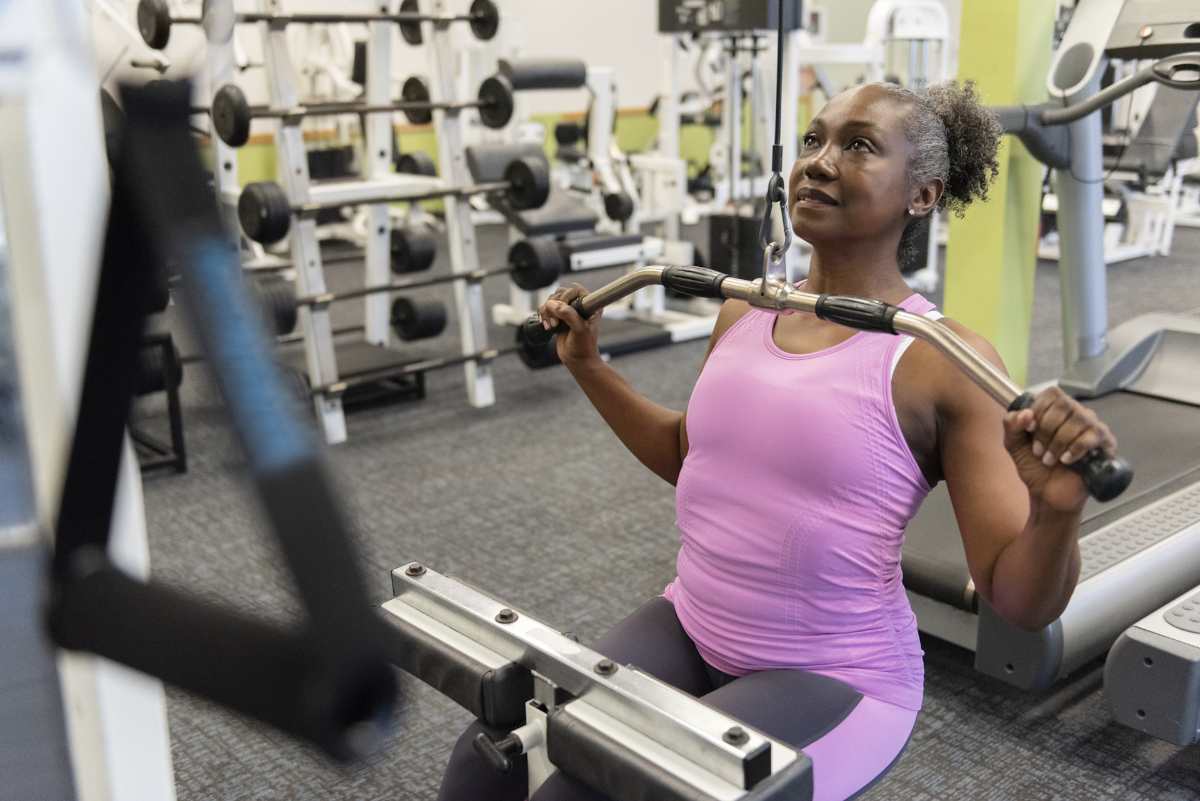
One of the most persistent myths in fitness is that strength sports are for the young — that peak performance belongs to athletes in their 20s and that everything after is a gradual descent.
The athletes competing in Masters divisions at the North Texas Strength Expo in Mesquite, Texas tell a different story.
Masters competitors in powerlifting, strongman, HYROX, and arm lifting regularly outperform athletes decades younger on a pound-for-pound or time-based basis. They've developed the technical sophistication, training intelligence, and physical foundation that takes years — not months — to build.
The key is understanding how training appropriately evolves across decades. Not compromising, not accommodating decline — adapting intelligently to maintain and improve performance with a different set of physiological parameters.
Your 20s — Building the Foundation
The 20s are the decade of maximum hormonal support for muscle building and strength development. Testosterone, growth hormone, and IGF-1 are all at or near their career peaks. Recovery from hard training is fastest. Connective tissue adapts readily to new loading demands.
What this means: The 20s are the time to put in volume, explore your physical limits, and build the foundational strength and movement patterns that will support you for decades. Mistakes in programming — overtraining, poor technique, impatient loading progressions — heal faster at this age, but they still leave traces. Develop good habits while the body is most forgiving.
Training emphasis: Build maximum strength across all the fundamental patterns (squat, hinge, press, carry). Don't let the recovery advantage lead to consistently poor programming — the habits formed now persist for decades.
Your 30s — Maintaining Growth, Managing Smarter
Hormonal levels begin declining modestly in the 30s — typically not dramatically, but measurably. More importantly, cumulative training stress and life demands (career, family, schedule) often change the available training time and recovery environment.
What changes: Recovery is slightly slower. Sleep quality may be more variable. Injuries from accumulated training stress — or from less appropriate 20s training — may make appearances.
What doesn't change: The capacity for meaningful strength gains continues through the 30s for most athletes. If you started training seriously in your 20s, the 30s are often the decade of peak competitive performance — you've built the foundation and the technical sophistication together.
Training adjustments: Be more intentional about recovery within your programming. One or two additional rest days per week compared to your 20s training frequency isn't regression — it's appropriate periodization. Prioritize sleep quality more actively. Begin taking mobility and joint health maintenance more seriously as a preventive measure rather than waiting for problems.
Your 40s — The Technical Decade
The 40s are where training intelligence separates athletes who continue developing from those who plateau or regress.
Hormonal decline becomes more pronounced — particularly testosterone in men after 40. Recovery takes longer. Connective tissue adaptation to new loading is slower. The rate of muscle protein synthesis following training begins to decline modestly.
What this means: The same training that produced results in your 20s and 30s may not produce the same results in your 40s — not because development is impossible, but because the recovery and adaptation timeline has changed.
What continues to work: The masters division at the North Texas Strength Expo is full of athletes in their 40s who are competitive at national level. Strength continues to develop in the 40s with appropriate programming. The changes that matter are methodological — not biological limits.
Training adjustments:
- Reduce training frequency if recovery is insufficient between sessions
- Prioritize intensity over volume when the two conflict — maximal effort with adequate recovery beats high volume with insufficient recovery
- Incorporate more deliberate warm-up time — the 40s athlete who starts heavy immediately pays a higher price for it than the 25-year-old who does the same
- Add dedicated mobility and soft tissue work as daily practice rather than occasional afterthought
- Consider the role of sleep and stress management as training variables — they matter more at 40+ than they did at 25
Your 50s and Beyond — Consistency as the Performance Variable
The athletes in their 50s and beyond competing at the North Texas Strength Expo have one thing almost universally in common: they've been training consistently for a very long time.
The performance at 55 is the product of decades of accumulated adaptation — a fitness foundation that doesn't disappear with hormonal decline but that requires consistent maintenance to preserve. Athletes who trained consistently through their 30s and 40s arrive at their 50s with a physiological foundation that athletes who started later at the same age simply don't have.
The key shift: Performance maintenance rather than linear development becomes the primary goal. This isn't resignation — it's the appropriate goal given the physiological reality. Maintaining significant strength, athletic capacity, and competitive performance into and through the 50s requires appropriate training, and that is a genuine achievement.
Training adjustments:
- Full body training frequency decreases — 3 sessions per week is often the sustainable training volume for 50+ athletes competing seriously
- Warm-up becomes as important as the main session — 15–20 minutes of deliberate preparation before heavy work is not optional
- Periodization becomes more conservative — the intensity range that produces adaptation without excessive tissue damage narrows with age
- Nutrition — particularly protein intake — becomes more important, not less. The anabolic threshold for muscle protein synthesis requires higher protein intake per meal to achieve the same response as in younger athletes. Research suggests 40g+ of protein per meal rather than the 20–25g that produces strong response in younger athletes.
Masters Divisions at the North Texas Strength Expo
Every competition at the North Texas Strength Expo has masters divisions that honor age-based achievement specifically. Powerlifting America masters divisions run from Masters 1 (40–49) through Masters 4 (70+). HYROX has age group brackets from 40–44 onward. Strongman Corporation has masters divisions from Masters 40+.
These aren't consolation categories — they're legitimate competitive divisions where athletes with decades of training behind them compete for national-level titles on the same floor as open competitors.
The masters athletes at the expo are proof that strength sports belong to athletes at every age.

Compete at any age at the North Texas Strength Expo in Mesquite TX.Get your tickets and registration at ntxstrengthexpo.com



Find Us On
.svg)

.svg)