


How to Handle a Bad Competition Day — What to Do When Things Don't Go as Planned
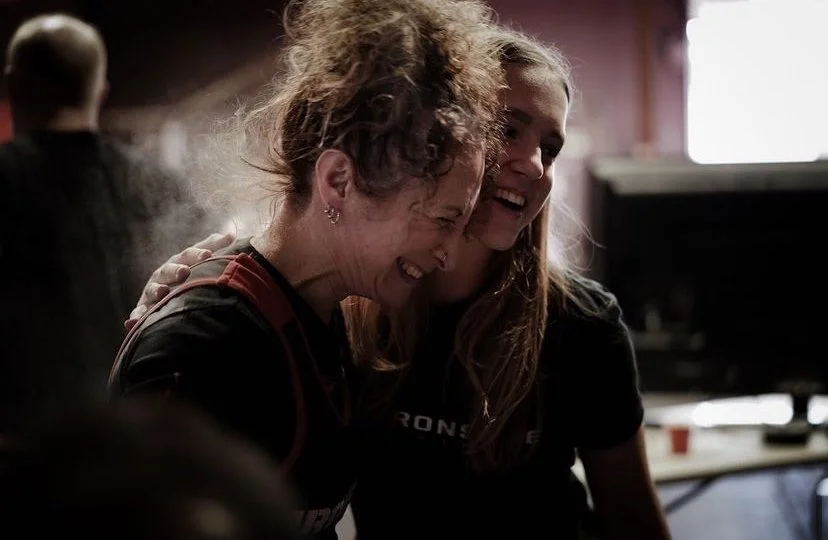
You've trained for months. You've peaked, tapered, made weight, and arrived at the competition venue with everything dialed in. And then something goes wrong.
A missed opener. A technical red light you didn't see coming. A HYROX station that fell apart. A strongman event that cost you the placing you needed. A powerlifting session where nothing felt like the training that led up to it.
Every competitive strength athlete experiences this. The bad competition day is not a question of if — it's when. And how you handle it in the moment, and what you take from it afterward, is one of the defining factors in how your competitive career develops.
This guide is for those moments.
In the Moment — Managing a Bad Start
The most damaging thing about a bad start to a competition is what it does to your mental state. A missed opener, a no-lift, or a poor first event doesn't end your competition unless you allow the psychological response to end it.
Name it and move on. The moment you notice things aren't going as planned, acknowledge it directly: "That wasn't what I wanted. Next attempt." Don't analyze, don't catastrophize, and don't try to understand what happened in the middle of competition. There will be time for analysis after. During the competition, your only job is the next attempt.
Return to your process cues. The mental preparation work you did before competition included specific cues for your technique and your execution. A bad start is the exact moment those cues become most important — they redirect your focus from the outcome (the bad result) to the process (the next lift, the next station, the next race segment).
Adjust, don't abandon. A missed opener in powerlifting doesn't mean taking the same weight again if the cause was clear. It means adjusting to address the specific failure. Your handler or coach should help with this adjustment in real time. If you're alone, make the decision based on what you saw and felt — not based on emotion.
Powerlifting Specifically — Handling Red Lights and Bombed Attempts
Red lights on a technical fault (depth, command miss, hitching) are recoverable. The key question is whether the fault was clear to you in the moment. If you know exactly what happened, you have information to correct on the next attempt. If you don't know what caused the red lights, ask the judges immediately — they're required to tell you the reason.
Missing your opener is emotionally devastating and strategically significant. In powerlifting, you have three attempts per lift. Missing the opener means you have two more chances to establish a total — but it also means your total strategy shifts. The most common advice: on your second attempt, take a weight you're absolutely certain you can make. Establishing a total is more important than chasing the number you originally planned.
Bombing out (failing all three attempts on a single lift) eliminates you from the total rankings. If this happens, the competition day isn't over — you still have other lifts to complete, and completing them with commitment demonstrates the character that brings you back to compete again. Finishing the session professionally, regardless of the result, matters for your development as a competitor.
Strongman Specifically — Handling a Difficult Event
Strongman competition is unique in that a poor result on one event doesn't necessarily destroy your overall placing — the point system means consistency across all events matters more than dominance on any single one.
A weak event result is an opportunity to calculate. Where do you stand after the event? How many points separate you from the next position? What events remain and where are your strengths? The competition isn't over until the final event — and strongman is famous for dramatic leaderboard shifts in the final Atlas Stone series.
A dropped implement or failed attempt mid-event is recoverable in most formats. Calm yourself, reset your grip or position, and continue. Athletes who panic after a drop often compound the error by rushing the recovery. Take the extra 2–3 seconds to reset properly.
HYROX Specifically — Handling a Blowup at a Station
HYROX is a continuous race — you can't stop and regroup between stations the way a powerlifter can step back from the platform. But you can manage pace.
If you blow up at a station: slow down, don't stop completely. Completely stopping at a HYROX station loses dramatically more time than slowing to a sustainable pace. A controlled slow-down lets your cardiovascular system partially recover while still moving toward the finish.
If you mistime your pacing on the runs: dial back immediately. The accumulated cost of running too fast in the early kilometers shows up in degraded station performance in the second half. Slowing down earlier is better than being forced to slow down completely.
After the Competition — What to Do with a Disappointing Result
Give yourself 24 hours before analyzing anything. The immediate post-competition emotional state is not the right environment for objective performance evaluation. Frustration, fatigue, and competition adrenaline all distort your assessment of what happened and why.
After 24 hours, sit down with your competition notes (or video if available) and ask specific questions:
- What specifically went wrong and when?
- Was this a preparation failure (training), an execution failure (technique under pressure), or an uncontrollable factor?
- What would I do differently in preparation?
- What would I do differently in execution?
The distinction between preparation failures and execution failures determines where your training attention goes next. A technique breakdown under competition pressure is a mental preparation issue. A strength limitation that showed up as a competition maximum is a programming issue. They require different responses.
The Longer View — What Bad Competition Days Actually Are
The athletes competing at the North Texas Strength Expo who have been doing this for years have all had bad competition days. The ones who continued have something in common: they treated the bad days as data rather than verdicts.
A bad competition day tells you something about your preparation, your mental game, your event-specific weakness, or your weight management. All of that information is useful. The competition that didn't go as planned is a teacher — one that's considerably more effective than the ones that confirm what you already thought you knew.
Come back. Train what you learned. Race again.

Your next competition is at the North Texas Strength Expo. Get ready for it.Get registered at ntxstrengthexpo.com



Find Us On
.svg)

.svg)