


HYROX Adaptive Division — The Complete Guide for Athletes With Disabilities
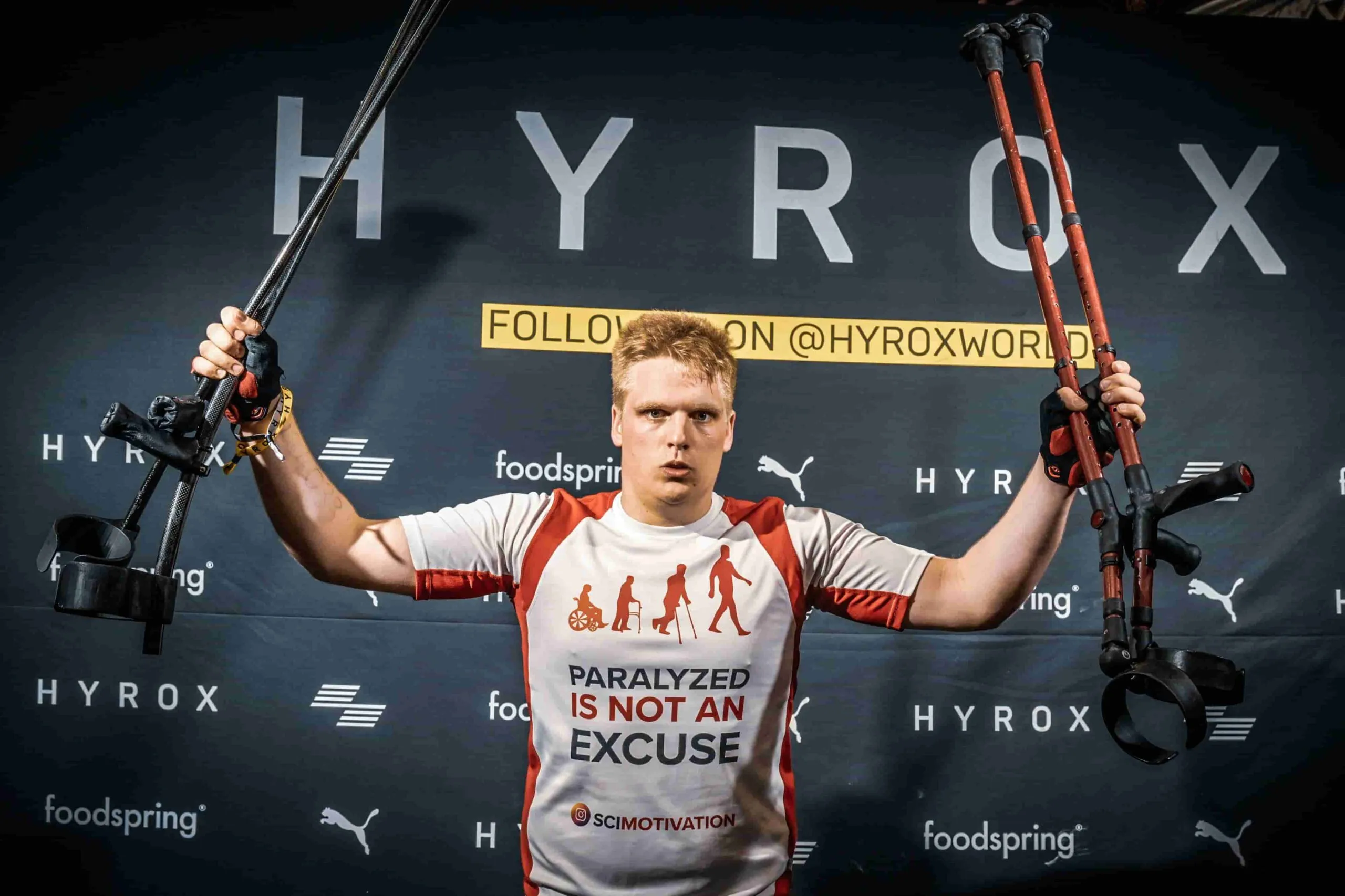
One of the most powerful statements HYROX has made as a global fitness organization is the development of its Adaptive Division — a structured, competitive racing format specifically designed for athletes with permanent physical, neurological, or sensory impairments.
This isn't a charity participation category. The HYROX Adaptive Division is a legitimate competitive division with its own World Championship qualification pathway, its own world records, and its own stories of extraordinary athletic achievement.
In the 2024/2025 season, HYROX took a significant step forward by adding an official Adaptive Division — designed to give more athletes with disabilities a shot at competing on the world stage while keeping the format challenging and competitive.
This guide covers everything athletes with disabilities need to know about competing in the HYROX Adaptive Division — and what spectators at the North Texas Strength Expo in Mesquite, Texas can expect when they watch adaptive athletes race.
What Is the HYROX Adaptive Division?
HYROX has always encouraged adaptive athletes to participate, but starting in the 2024/25 season, athletes can now register in a specific division for their impairment. A new rulebook was introduced for the 2024/25 season, which better outlines the 9 impairment divisions, movement standards, workout modifications, and qualification system for the World Championship.
Mintra Tilly, HYROX Head of Sports, described the launch: "We have already seen many incredible adaptive athletes complete HYROX across the world in past seasons. It's always been a priority for us to be able to cater more comprehensively to the community and now I'm pleased to be able to implement this first season of 'Official' Adaptive Racing with many more to come."
The 9 HYROX Adaptive Impairment Classifications
To accommodate athletes with varying physical impairments, HYROX has developed the following adaptive divisions: Lower Limb Impairment (limited function of mobility in the legs), Upper Limb Impairment (reduced function or mobility in the arms), Short Stature Impairment (short height due to skeletal conditions), and Visual and Hearing Impairments (partial or total loss of vision or hearing).
The full classification system includes:
1. Lower Limb Impairment (LLI) — Limited or absent function in one or both legs. Includes athletes who use prosthetics, crutches, or walking aids.
2. Upper Limb Impairment (ULI) — Reduced function or mobility in one or both arms. Affects grip, pulling, and pushing mechanics.
3. Short Stature (SS) — Short height due to skeletal conditions. Modified running distance applies.
4. Visual Impairment (VI) — Partial or complete loss of vision. Guide runners are permitted.
5. Hearing Impairment (HI) — Partial or total loss of hearing. Visual signals replace auditory competition cues.
6. Neurological Major (NM) — Significant neurological conditions affecting movement control. Modified running distance applies.
7. Seated With Hip Function (SWHF) — Athletes who use wheelchairs but retain hip/core function.
8. Seated Without Hip Function (SWOHF) — Athletes who use wheelchairs without retained hip function.
9. Seated Without Core Function (SWOC) — Athletes using wheelchairs without core function. Most extensive modifications apply.
If your impairment does not fall within the listed divisions, HYROX encourages you to contact them directly. The system is an ongoing project and they highly value feedback to ensure a more inclusive and accurate classification process.
How the Race is Modified for Adaptive Athletes
The core HYROX format — 8 rounds of running followed by a workout station — applies to all adaptive divisions with specific modifications based on classification:
Running distance: The run distance remains standardized at 1km between the functional stations for most athletes, however athletes with neurological impairments or short stature complete 1 lap (approximately 350 meters).
Workout station modifications: Each impairment classification has defined modifications for specific stations. For example, for seated athletes without hip function, the sled push is 2 x 12.5 meters at 75kg including sled for men and women, and for seated without core function, 2 x 12.5 meters at sled without weight.
Burpee broad jump modifications: Athletes with impairments that limit or prevent jumping perform 40 meters of 2 in-place burpees/walkouts, followed by 4 steps with crutches using a 2, 3, or 4-point gait pattern.
Guide runners: Athletes with visual or hearing impairments can have a guide runner for orientation and positioning at workout stations. Guide runners are not provided by HYROX but can be appointed by the athlete free of charge.
Special equipment: HYROX allows athletes to use necessary additional gear, such as wrist straps or hooks, and deducts the handling time from their overall time.
World Championship Qualification
The HYROX Adaptive Division has its own World Championship pathway — competitive performance at sanctioned events can qualify athletes for the annual World Championships.
Qualification spots are limited to 3 per division across the season. The top 3 athletes in each division, based on the fastest times of the entire season, will be invited to compete at the HYROX World Championships.
Athletes must be officially classified into one of the above divisions to ensure eligibility. These divisions are reserved for individuals with permanent impairments. Athletes with temporary injuries (e.g. due to knee surgery) do not qualify for adaptive categories.
How to Register for HYROX Adaptive
Head to hyrox.com and choose the city you wish to compete in from the "Find my Race" section. Purchase an Individual Adaptive ticket and select your impairment.
For the North Texas Strength Expo HYROX event, adaptive division availability is confirmed through the official expo and HYROX registration. Athletes with questions about adaptive accommodations at the expo venue can contact the event through ntxstrengthexpo.com.
What Watching Adaptive HYROX Looks Like
The moment that captures what adaptive HYROX competition actually means came at the 2025 World Championships. As David Wetherill, a Paralympian representing Great Britain who has a lower-limb impairment and relies on mobility aids, approached the final station — 100 wall ball reps with a 14 lb. ball — HYROX staff spontaneously formed a cheer circle around him. Every athlete who had already finished joined in. They cheered, they danced. He gritted through, rep by rep, with a level of perseverance unlike anything anyone in that building had witnessed from another human being.
That moment is what adaptive sport can be at its best. Not a footnote. A highlight. The North Texas Strength Expo is committed to making the HYROX event inclusive and accessible for athletes of all abilities.

Every athlete belongs on the race floor. Register for HYROX at the North Texas Strength Expo.Get registered at ntxstrengthexpo.com



Find Us On
.svg)

.svg)