


HYROX Sandbag Lunges — Station 7 Complete Guide to Rules, Technique, and Training
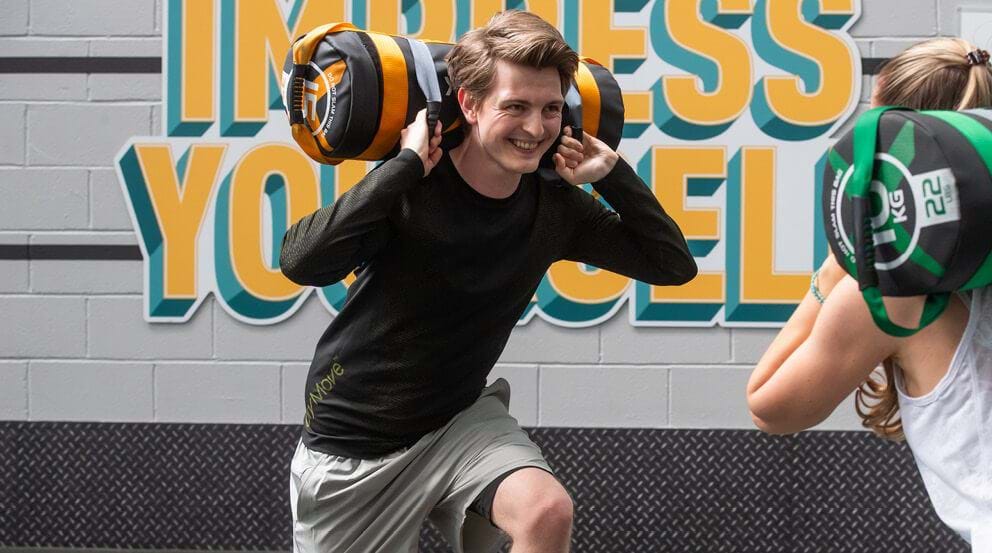
Station 7 of every HYROX race is designed to break athletes who haven't trained specifically for it. The sandbag lunges arrive after 7km of running and six previous workout stations — your legs have already done SkiErg, sled push, sled pull, burpee broad jumps, rowing, and farmer's carry. And now you have 100 meters of walking lunges with a weighted sandbag on your back before your final run and wall balls.
The HYROX sandbag lunges aren't the most technically complex station in the race. But their position in the race — Station 7, when accumulated fatigue is at its peak — makes them one of the most challenging to execute consistently.
HYROX Sandbag Lunges Standards
Distance: 100 meters of walking lunges
Weights by division (Season 2025/26):
- Women Open: 10kg
- Men Open: 20kg
- Women Pro: 10kg
- Men Pro: 20kg
Key rules from the official HYROX rulebook:
- The trailing knee must touch the ground on every rep
- Lunges must alternate knees — you cannot take two consecutive steps with the same foot
- You cannot place the sandbag on the floor at any point during the station
- Athletes may stop after each lunge with both feet on the ground if they prefer this to continuous lunging
- Failure to alternate knees results in disqualification; trailing knee not touching the ground incurs a 15-second penalty per infringement
Sandbag Position — How to Carry It
The sandbag in HYROX sandbag lunges is carried on the upper back — across the shoulders and upper traps. This position creates a loading pattern that challenges the spine under compression while the legs perform the lunge movement.
Two common carry positions:
- High carry (across the upper traps): Most stable for the spine, similar to a barbell back squat position. Keeps the center of mass close to the body and allows for the most upright torso during the lunge.
- Bear hug carry (sandbag in front, hugged to the chest): Some athletes prefer this, particularly for lighter sandbags. It's less stable for the upper back but distributes load differently.
The upper trap/high carry is the standard competitive position and is what most athletes use in training and racing. Get comfortable with it before race day.
Lunge Technique at Station 7
Step forward: Take a deliberate step forward with the lead foot, landing in a stable position with the front shin vertical or slightly forward.
Lower the rear knee: Control the descent of the rear knee to the floor. The knee must make contact — not hover just above the floor. A light, controlled touch is sufficient.
Drive through the front foot: Push through the heel of the front foot to stand, bringing the rear foot forward to begin the next step.
Torso position: Keep your chest up and core braced throughout. The sandbag creates a tendency to lean forward — resist it. A more upright torso reduces lower back strain and produces more efficient movement mechanics.
Breathing: Develop a consistent breathing pattern — typically one breath per lunge cycle (inhale as you lower, exhale as you drive up). Consistent breathing prevents the respiratory fatigue that can set in unexpectedly during this station.
Common Sandbag Lunge Mistakes
Rear knee not touching the ground. The most penalized infringement at this station. It feels natural to stop the knee just above the floor under fatigue — but that's a 15-second penalty per rep. Practice specifically touching the knee to the ground in training so it's automatic.
Missing alternate knees. Taking two steps with the same foot is illegal and results in disqualification. Focus on conscious alternation — particularly when fatigue sets in and automatic movement patterns want to simplify.
Placing the sandbag down. The sandbag cannot be put on the floor under any circumstances. If you need to rest, stand with both feet on the ground while still supporting the bag. Plan your rest strategy before you need it.
Going too fast in the first 30 meters. Athletes who race the first third of the station burn out before the halfway point. A consistent, sustainable pace across all 100 meters beats a fast start followed by grinding through the back half.
Leaning excessively forward. The sandbag creates a forward-pull tendency. Actively cue an upright torso — "chest up, proud" — throughout the station.
Training the Sandbag Lunges
Train fatigued. The most important training principle for the sandbag lunges is practicing them when your legs are already tired — not fresh. Add sandbag lunge sets to the end of your running sessions, after sled work, or after a full lower body training day. Your body needs to know what 100m of lunges feels like when everything else is already spent.
Progressive lunge volume: Build lunge volume progressively across your training cycle. Start with 2x30m with the competition sandbag and build toward full 100m sets with appropriate rest.
Knee-to-floor practice: Specifically practice touching the knee to the ground in every training rep. Build the habit so it's automatic under race fatigue.
Hip flexor flexibility: The lunge position demands hip flexor range of motion. Athletes with tight hip flexors produce shorter strides and more forward lean. Regular hip flexor stretching and mobility work improves both comfort and technique at this station.
Quad endurance: The sandbag lunge is a quad-dominant movement. Front squats, goblet squats, and step-ups with load all develop the specific quad endurance the station demands.

Race Station 7 with preparation — register for HYROX at the North Texas Strength Expo.Get registered at ntxstrengthexpo.com



Find Us On
.svg)

.svg)