


HYROX Sled Pull — Station 3 Complete Guide to Technique and Training
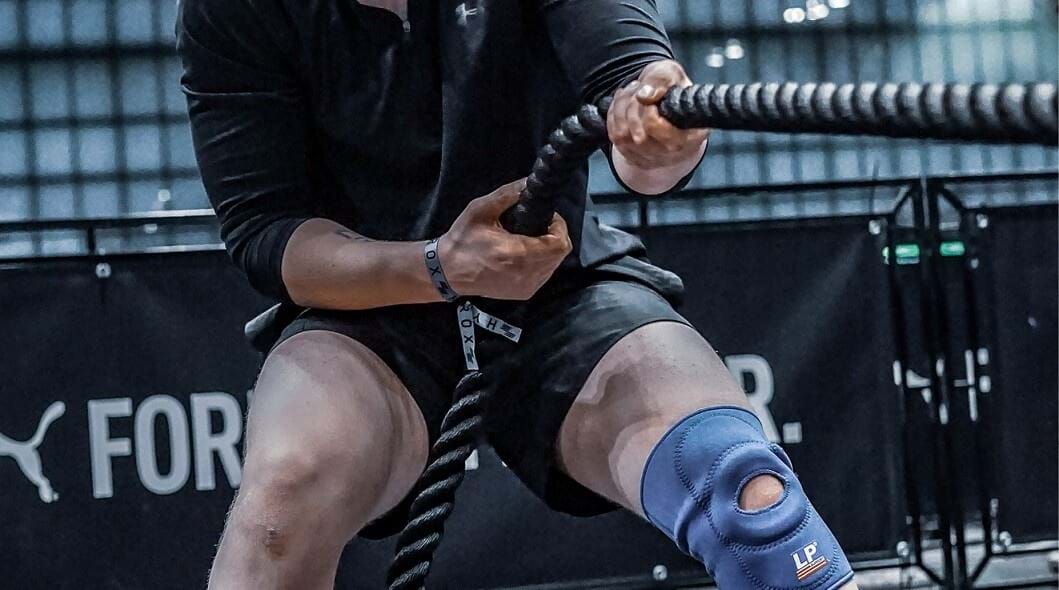
The HYROX sled pull is Station 3 — immediately following the sled push — and it tests a completely different physical demand from its predecessor. Where the push requires horizontal drive and leg power in a forward direction, the pull requires pulling mechanics, grip endurance, and core stability as you drag the sled backward toward you using a rope.
Most athletes find the sled pull more manageable than the push. That relative managability can lead to underpreparation — athletes who train the sled push specifically often give the pull much less attention. This guide makes sure you're ready for both.
HYROX Sled Pull Standards
Distance: 50 meters
Weights by division (Season 2025/26):
- Women Open: 78kg
- Men Open: 102kg
- Women Pro: 102kg
- Men Pro: 152kg
How it works: The sled is positioned at the far end of the 50-meter lane. A rope connects the sled to the athlete. The athlete pulls the rope hand-over-hand, drawing the sled toward them across the full 50-meter distance.
Key rule: Athletes must pull using the rope — not walking or running toward the sled. The pulling mechanics are the entirety of the station.
Sled Pull Technique
Starting position: Stand at the pulling end of the lane facing the sled. The rope lies on the ground between you and the sled. Grip the rope with both hands in an alternating overhand grip.
Body position: Lean back slightly from the hips — not dramatically, but enough to create the pulling angle that generates force toward you. Keep your core braced and your chest lifted. An upright or slightly reclined body angle is more efficient than leaning forward over the rope.
The pull mechanics: Use a hand-over-hand rope technique — pull with one hand, then the other in alternating sequence. Each pull draws a section of rope through your hands and moves the sled closer. Focus on pulling through the full range of each arm extension before transitioning to the next hand.
Footwork: Some athletes use a walking-backward technique — taking small backward steps as they pull — which allows continuous movement and better body position management. Others remain in a stationary position and use pure upper body pulling. The walking-backward technique is generally faster for most athletes because it keeps the body-to-rope angle consistent.
Grip: The sled pull is one of the more grip-intensive stations because of the sustained rope-holding demand. Ensure chalk is available and applied appropriately. Athletes who have developed grip endurance through farmer's carry and arm lifting training often find the sled pull relatively comfortable.
Differences from the Sled Push
The sled pull taxes different muscle groups than the push:
- Sled push: quads, glutes, calves — anterior-dominant leg drive
- Sled pull: lats, biceps, rear deltoids, core — pulling muscles and posterior chain
Athletes with strong pulling strength (from rows, pull-ups, deadlifts) typically find the sled pull more manageable than athletes with primarily anterior strength development. If the sled pull is a consistent weakness in your HYROX training, adding rowing volume and horizontal pulling exercises is the targeted fix.
Common Sled Pull Mistakes
Letting the rope pile up under your feet. As you pull the rope through, it accumulates at your feet. Stepping over accumulated rope creates trip hazards and disrupts your rhythm. Step sideways slightly as you pull to manage the rope away from your feet, or use a wider pulling stance that lets the rope pile off to one side.
Rushing the pull without full arm extension. Short, choppy pulls that don't extend the arm fully reduce the effective pulling distance per rep. Extend fully on each pull before transitioning to the next hand.
Gripping too tightly throughout. Sustained maximum grip pressure throughout the station fatigues the forearms unnecessarily. Maintain firm contact but not a death grip — particularly in the middle of the station where the rope is closer to you and the effort is lower.
Pacing too hard. The sled pull comes after the push, and athletes who blew up on the push arrive here already fatigued. Find a steady rhythm rather than racing the pull — your cardiovascular and muscular systems need to be managing accumulated fatigue at this point.
Training the Sled Pull
Rope pulls with resistance: Use a battling rope attached to a light resistance (another athlete's resistance, a weighted sled, or a resistance band) to practice the rope-over-rope mechanics. The movement pattern is distinct from any standard gym exercise and requires specific practice.
Horizontal pulling strength: Seated cable rows, single-arm rows, and lat pulldowns all develop the pulling muscles used in the sled pull. Include these as consistent accessories in your HYROX programming.
Grip endurance: The grip demand of the sled pull responds to the same grip training that benefits the farmer's carry — timed holds, fat grip work, and towel/rope dead hangs.
Sled pull simulation: If your training facility has a sled, practice the pull specifically at competition weight before race day. The rope-over-rope mechanic feels different from any pulling exercise with a fixed handle.

Race every station prepared — register for HYROX at the North Texas Strength Expo.Get registered at ntxstrengthexpo.com


Find Us On
.svg)

.svg)