


Powerlifting Attempt Selection — The Complete Strategic Guide
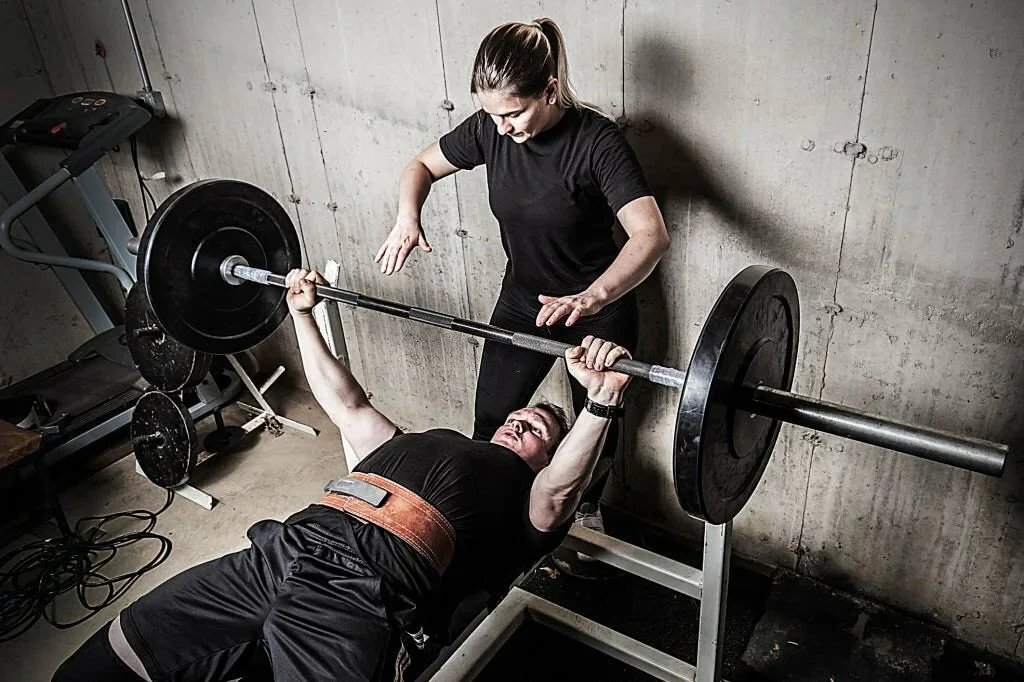
Every powerlifting competition is won or lost twice: once in training and once in attempt selection. An athlete who has built an exceptional total in the gym can leave with a disappointing result if they attempt selection badly. An athlete who is strategic with their selection can maximize every pound of the strength they've built.
Powerlifting attempt selection is the most consistently underestimated technical skill in the sport — and it's almost never taught explicitly. This guide covers the complete strategy for selecting all nine attempts across squat, bench press, and deadlift.
The Golden Rules of Attempt Selection
Rule 1: Your opener is the most important attempt. Three white lights on your opener gives you a total, builds confidence, and lets you approach second and third attempts from a position of strength. A missed opener costs you an attempt, disrupts your rhythm, and compresses your remaining attempts into a narrower strategic window. Openers should be weights you can hit on the absolute worst training day of your life.
Rule 2: Second attempts confirm and build. After a successful opener, your second attempt should be a weight that's challenging but well within your current capability — roughly 97–100% of a training max you've hit multiple times in the past month.
Rule 3: Third attempts are either records or race requirements. Your third attempt should be either a personal record attempt at a weight you've genuinely prepared for, or the specific weight required to beat or match a competitor for a placing. Never waste a third attempt on a weight that's neither a PR nor competitively meaningful.
How to Select Your Opener
The opener formula that works consistently across levels:
Opening weight = a weight you've hit for 2–3 clean reps in training within the past 4 weeks, converted to a single.
If you've been hitting your competition squat for sets of 3 at 130kg in your peak training, your opener should be around 120–125kg. Not your training max. Not what you want to open with. What you've actually hit cleanly under fatigued conditions recently.
The feel test: Your opener should feel like something you could hit twice in a row if needed. If your opener feels heavy in warm-up — not hard, just heavy — it's too close to your max for an opener.
The 90% principle: Many coaches use roughly 90% of the athlete's estimated competition max as the opener guideline. This varies by athlete — some lifters are technically better at competition weight and can open higher, while others benefit from the confidence of a more conservative start.
How to Select Your Second Attempt
Second attempt selection happens after your opener result and depends on how it went.
After a successful opener (normal condition): Jump by approximately 5–7.5% of your opening weight. For most athletes, this is a 5–10kg jump on the squat and deadlift, and a 2.5–5kg jump on bench press.
After a surprising opener (felt easier than expected): You can consider a slightly larger jump, but don't overreact to one easy attempt. The second attempt should still be a weight you've prepared specifically for — not a weight you're improvising based on one warm-up feeling.
After a failed opener: Your best option in most cases is to repeat the opener weight (possibly with a minor adjustment if the failure had a specific mechanical cause) rather than reducing significantly. Reducing your opener by more than 5% typically signals that the opener was miscalculated from the start.
How to Select Your Third Attempt
Third attempt strategy is where competition becomes chess.
Scenario 1 — Chasing a PR: If your second attempt was successful and your third represents a genuine personal record, the calculation is whether the training supports the weight. Did you hit something close to this weight in training? Is it a specific number you've been building toward? If yes, take the attempt.
Scenario 2 — Chasing a placing: If you need a specific weight to beat or tie a competitor for a placing, you take the weight regardless of how optimal it is for your own development. Competition placing is its own category — sometimes you take a third attempt that's not your ideal PR attempt because the competition requires it.
Scenario 3 — Protecting your total: If your second attempt was hard and third represents an unnecessary risk to your overall total, consider a modest third that confirms a strong placing rather than risking a bomb on a weight that serves only your ego.
Timing — When Attempt Changes Are Made
In Powerlifting America competition, attempt changes can typically be made once per attempt within the specified time window before the attempt is called. Miss the window and you're lifting what you submitted.
Know this before competition day. The meet director or head table official will explain the specific change protocol at the rules meeting. Confirm whether changes must be submitted before the previous lifter is called or the previous lifter finishes.
Have a handler who knows the timing. Most experienced competitors use a handler (coach, training partner, or experienced competitor) to manage attempt changes at the table. The handler watches the flight order, manages timing, and makes strategic adjustments based on what's happening in competition.
Attempt Selection in Practice — An Example
Athlete preparing for the Powerlifting America showcase at the North Texas Strength Expo. Squat training max: 155kg hit recently in training.
Opener submission: 137.5kg (approximately 89% of training max)After successful opener: Jump to 147.5kg (7.5kg jump, approximately 95% of training max)After successful second: Jump to 157.5kg (PR attempt, 10kg above training best, achievable based on training progression)
This selection sequence gives three legitimate attempts, builds progressively, and puts a true PR attempt on the third — the ideal structure for any powerlifting competition.

Execute your best total at the Powerlifting America showcase — NTX Strength Expo Mesquite TX.Get registered at ntxstrengthexpo.com



Find Us On
.svg)

.svg)