


Strength Training for HYROX Stations — The Specific Exercises That Transfer Directly
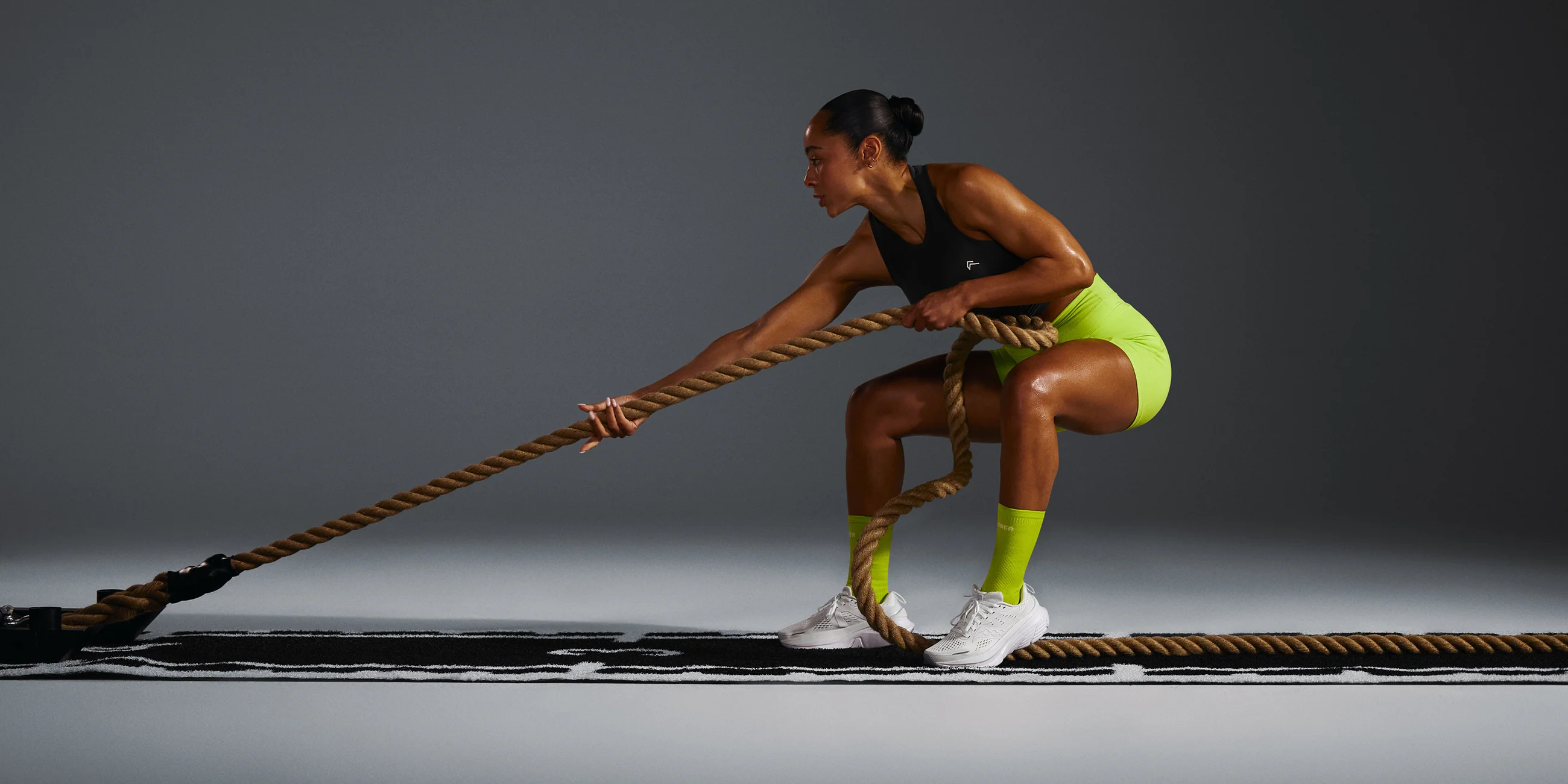
There's a difference between being strong and being strong in the ways that HYROX demands.
A 400-pound deadlifter who has never trained hip horizontal drive won't necessarily push the sled efficiently. A marathon runner who has built impressive aerobic capacity won't automatically have the grip endurance to hold competition farmer's carry handles for 200 meters. HYROX requires the specific expressions of strength that its stations demand — not just general strength.
This guide maps each HYROX station to the specific strength training exercises that transfer most directly to better performance.
Station 1 — SkiErg (1,000m)
What it demands: Lat, shoulder, and core pulling strength with full-body compression mechanics.
Best transfer exercises:
Lat pulldown (cable): The most direct movement analogy to the SkiErg pull-down. Using a wide grip, pull from overhead to the upper chest — the same arc as the SkiErg stroke. 3 sets of 12–15 at moderate weight.
Straight-arm pulldown: Keeps the arms straight throughout, isolating the lat as the primary driver — exactly as in an efficient SkiErg stroke. 3 sets of 15.
Band pull-aparts (face-front): Builds the posterior shoulder stability that supports sustained SkiErg output across 1,000 meters. 3 sets of 20 as a pre-training activation.
Station 2 — Sled Push (50m)
What it demands: Quadricep and glute power, hip extension drive, shoulder stability in a horizontal pressing position.
Leg press (full extension): The sled push is essentially a horizontal leg press. Building leg press strength directly transfers to sled push power. 4 sets of 8 at challenging weight with full extension.
Hip thrust (barbell): Develops the hip extension power that drives the most efficient sled push stride. 3 sets of 10.
Push-up variations (feet elevated): Builds the shoulder stability and horizontal pressing endurance that the sled push arm position demands. 3 sets of 15.
Sled drag backward: Pulling a sled backward while walking builds the hip extension and glute drive pattern used in the push. 3 sets of 30 meters.
Station 3 — Sled Pull (50m)
What it demands: Upper back, bicep, and rear deltoid pulling strength with grip endurance.
Seated cable row (horizontal): The most direct transfer to sled pull mechanics — seated, pulling horizontally with both arms alternating. 3 sets of 12.
Barbell row: Horizontal pulling under load. 4 sets of 6–8.
Battle rope waves or pulls: Specifically develops the rope-over-rope pulling pattern of the sled pull. If battle ropes are available, include them regularly.
Towel pull-ups or rope climbs: Develops the grip-intensive pulling strength that the sled pull rope demands over 50 meters.
Station 4 — Burpee Broad Jump (80m)
What it demands: Hip explosive power for the horizontal jump, pushing mechanics for the burpee press-up, ankle and hip flexibility.
Box jump (horizontal emphasis): Standing broad jump practice or horizontal box jumps directly build the jump distance that saves reps. 3 sets of 5 with full recovery between reps.
Jump squat: Develops the explosive leg drive that generates horizontal jump distance. 3 sets of 6.
Push-up (with pause): Builds the pressing endurance for the burpee component across 80 meters. 3 sets of 15.
Hip flexor mobility work: Not a strength exercise — but hip flexor flexibility directly limits jump landing mechanics. Include daily.
Station 5 — Rowing (1,000m)
What it demands: Leg drive, back and hip hinge, lat and bicep pulling endurance.
Deadlift (conventional): The drive phase of the rowing stroke mirrors the hip extension of the deadlift. Deadlift strength directly transfers to rowing drive power. 3 sets of 5 at moderate-heavy weight.
Romanian deadlift: Builds the posterior chain endurance used in sustained rowing. 3 sets of 10.
Seated cable row (with pause at catch): Practice the full rowing sequence with deliberate pause at the catch position to strengthen the turnover. 3 sets of 12.
Station 6 — Farmer's Carry (200m)
What it demands: Grip endurance, core stability, postural strength under sustained load.
Timed barbell deadlift hold: Hold a loaded barbell at lockout for 30–45 seconds. Builds the static grip endurance the carry demands. 3 sets per session.
Trap bar carry: If available, trap bar walks at above competition weight for 30–40 meters directly prepare the carry mechanics. 3 sets.
Single-arm suitcase carry: Unilateral farmer's carry develops the lateral core stability that bilateral carries can mask. 3 sets of 30 meters each arm.
Fat grip dumbbell curls: Building grip-specific strength with a thicker implement. 3 sets of 12.
Station 7 — Sandbag Lunges (100m)
What it demands: Quad endurance, hip stability, upper back strength to maintain sandbag position.
Front foot elevated split squat: One of the most effective single-leg quad builders. 3 sets of 10 each leg.
Walking lunge (weighted): With dumbbells, barbell, or sandbag — directly prepares the lunge mechanics under load. Build toward 50+ meter continuous sets.
Box step-up (weighted): Develops the single-leg drive that each lunge requires. 3 sets of 12 each leg.
Goblet squat (heavy): Builds the quad strength with the same front-loaded position as the sandbag carry. 3 sets of 8.
Station 8 — Wall Balls (75/100 reps)
What it demands: Quad endurance for the squat, shoulder endurance for the throw, hip-to-arm power transfer.
Goblet squat to press: The exact movement pattern of the wall ball — squat, then press overhead. Practice with a moderate dumbbell or medicine ball for high reps. 3 sets of 20.
Thruster (barbell): Squat plus overhead press in one movement. Builds the specific power transfer pattern that makes wall balls efficient. 3 sets of 10 at moderate weight.
Wall ball specifically: There's no better training for wall balls than wall balls. Practice at competition height and weight for sets of 25–35 reps at the end of hard conditioning sessions.
Shoulder press endurance: 3 sets of 15–20 at light weight, specifically training the shoulder endurance to sustain 75–100 reps under fatigue.

Train every station. Race every station at the NTX Strength Expo HYROX in Mesquite TX.Register at ntxstrengthexpo.com



Find Us On
.svg)

.svg)