


The Atlas Stone — Everything You Need to Know About Strongman's Most Iconic Event
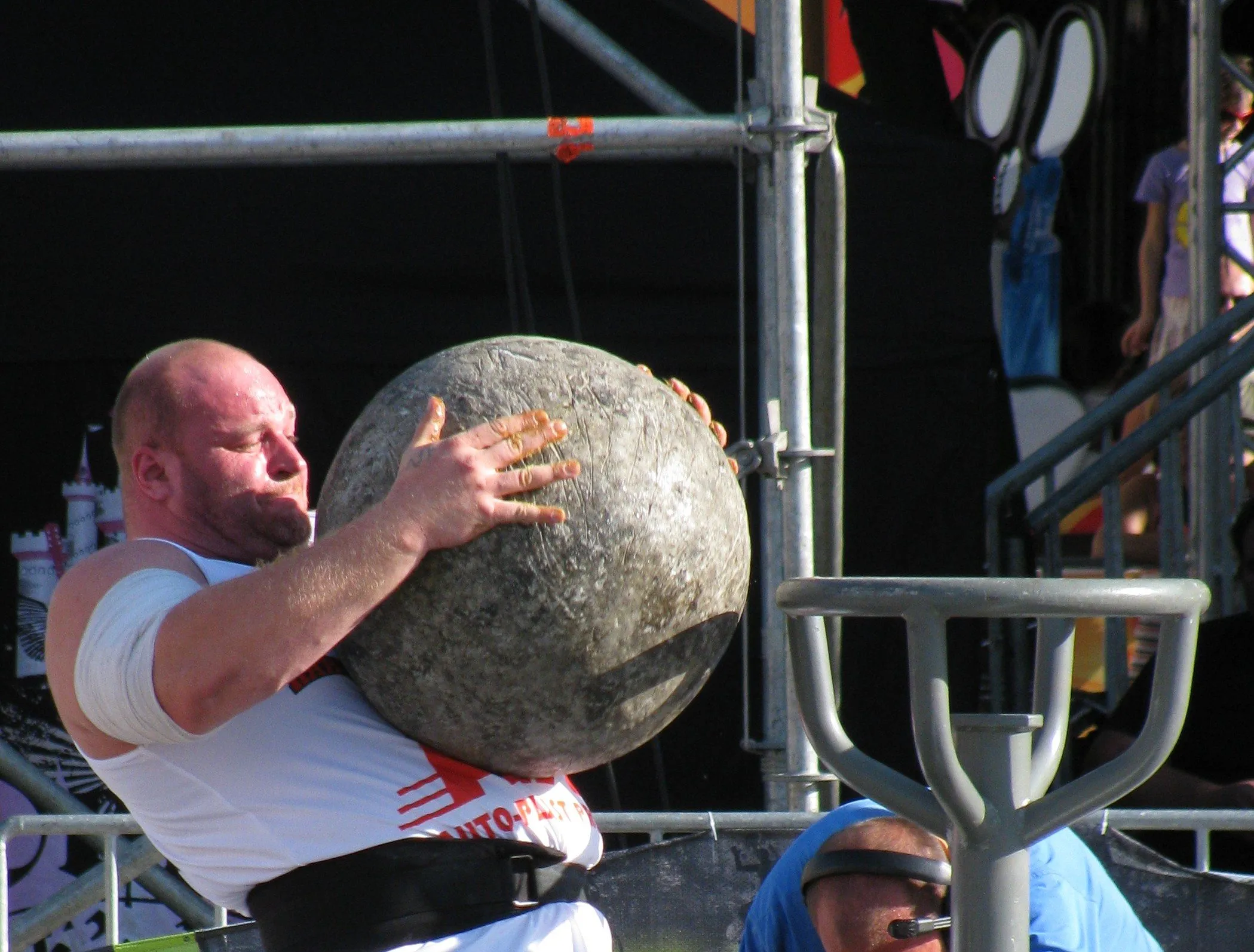
If there is one image that defines strongman competition, it is the Atlas Stone.
Round. Smooth. Heavy. Loaded onto a platform by a human being using nothing but grip, technique, and raw physical force. The Atlas Stone is the event that people picture when they think about strongman — and for good reason. It is simultaneously the most visually distinctive, the most technically demanding, and the most emotionally charged event in the entire sport.
The North Texas Strength Expo in Mesquite, Texas features Strongman Corporation Nationals — the national amateur strongman championship — where the Atlas Stone is one of the signature events on the competition floor. If you've never seen an Atlas Stone series live, that changes when you walk through the doors in Mesquite.
This is everything you need to know about the Atlas Stone — its history, how it works, what it demands, and why it stops everyone in the building when it starts.
What Is the Atlas Stone?
The Atlas Stone is a smooth, round ball made from concrete, shaped specifically to be difficult to grip and load. Unlike a barbell, which has a handle designed for human hands, or a dumbbell, which at least has a defined shape to grip, the Atlas Stone offers nothing. No handle. No edge. No convenient place to position your hands. Just a smooth sphere of concrete weighing anywhere from 200 pounds to over 500 pounds in competition.
The task is simple to describe: pick the stone up from the ground and load it onto a platform. In a typical Atlas Stone series at competition, athletes load a sequence of progressively heavier stones onto platforms of increasing height, racing against the clock or competing for maximum stones loaded.
The simplicity of the objective is what makes the Atlas Stone so universally compelling. You either load the stone or you don't. The crowd knows the moment it leaves the ground whether the athlete is going to make it. And when the heaviest stone of a series goes up — when an athlete who has been loading stones for minutes straight finds something extra for the final attempt — the reaction in the room is unlike anything else in sports.
The History of the Atlas Stone
The Atlas Stone has roots that go back much further than modern organized strongman competition. Stone lifting has been a test of strength in human culture for centuries — in Scotland, the Dinnie Stones have been used as a strength test since the 19th century. In Iceland, the Húsafell Stone has been carried by strongmen for over 200 years as a traditional test of local strength.
The modern Atlas Stone as a competition event was popularized by the original World's Strongest Man competitions beginning in the late 1970s and early 1980s. The event captured television audiences immediately — there was something about watching a human being lift a perfectly round, enormously heavy ball that communicated raw strength more viscerally than any conventional barbell movement.
The stones used in early World's Strongest Man competitions were literally sourced from quarries or cut to approximate size. Modern competition stones are precision-made from concrete mixed to specific densities that produce consistent weight at each standardized size. The stones used at Strongman Corporation Nationals at the North Texas Strength Expo are competition-grade implements that have been developed over decades of organized strongman competition.
How the Atlas Stone Event Works at Strongman Competition
At Strongman Corporation Nationals, the Atlas Stone event typically takes one of two main formats:
The Loading Series — Multiple stones of progressively increasing weight are placed in a row. Athletes load them in sequence onto platforms of increasing height as fast as possible. The goal is to load as many stones as possible in a set time limit, or to load all stones and finish with the fastest time. Most national-level loading series feature four to six stones, with the lightest opening stone typically in the 200–280 pound range and the heaviest closing stone often exceeding 400–450 pounds.
Max Stone — Athletes attempt to load the heaviest stone possible over a bar or onto a platform. Each athlete gets multiple attempts, and the heaviest successful load determines placement. Max stone events can produce attempts in the 450–550+ pound range at the elite national level.
The scoring works the same as other strongman events: athletes earn points based on their finishing position in the event, and those points accumulate across all events to determine the overall winner of their weight class.
The Technique Behind the Atlas Stone
This is where most spectators are surprised. The Atlas Stone looks like it's about brute force. In reality, it requires more specific technical development than almost any other event in strongman.
The approach and setup. Experienced stone loaders approach the stone with deliberate positioning — feet placement, hip height, and initial body position all matter significantly. The setup establishes leverage that either works for the athlete throughout the lift or fights against them from the first contact.
The lap position. Once the stone breaks from the ground, the athlete drives it upward into their lap — an intermediate position where the stone rests against the thighs and lower abdomen. This requires a specific wrist position, hip drive, and core bracing that takes significant practice to execute cleanly. Athletes who reach the lap position efficiently preserve energy for the loading phase. Athletes who fight the stone to the lap spend energy they need for the finish.
The loading extension. From the lap, the athlete extends their hips and chest simultaneously to drive the stone upward and forward onto the platform. The timing of this extension — too early and the stone doesn't clear the platform, too late and the athlete's leverage is gone — is the technical moment that separates experienced stone loaders from beginners.
Tacky. Most Atlas Stone competition allows athletes to use tacky — a sticky resin substance applied to the forearms and sometimes the shirt — to help grip the smooth concrete surface. Tacky use is a skill in itself: too much and your arms stick to the stone at the wrong moment, too little and you lose grip mid-lift. Experienced stone athletes develop their own tacky protocols over years of competition.
What Makes the Atlas Stone Different to Watch Live
You can watch an Atlas Stone series on YouTube and appreciate that what you're seeing is impressive. Standing in the room when it's happening is a completely different experience.
The size of the stones in person is the first thing that resets your expectations. The smallest stone in a loading series is typically larger than a basketball and weighs more than most people's body weight. The largest stones in a national-level series are genuinely difficult to comprehend as objects a human being is expected to move.
The noise is the second thing. When an Atlas Stone contacts the platform — when it lands after a successful load — the sound carries through the venue in a way that no barbell drop or weight plate does. It's dense, heavy, and physical. Everyone in the building feels it.
The crowd reaction is the third thing. Atlas Stone heats draw the most concentrated crowd presence at any strongman event. People stop what they're doing on the vendor floor, pause on their way between competitions, and gather around the stone course. Something about the event draws everyone. And when the heaviest stone of the series goes up and the time stops, the room reacts with a collective energy that you carry with you long after the event is over.
See the Atlas Stone Live at Strongman Corporation Nationals
The Atlas Stone is on the program at Strongman Corporation Nationals at the North Texas Strength Expo in Mesquite, Texas. National-level athletes who have qualified through a full competitive season will load these stones on the biggest amateur strongman stage in the country, in front of 5,000+ fans, in an expo environment that puts the entire strength community in one building.
This is the event that turns curious spectators into committed strongman fans. Come see it.

The Atlas Stone. The national stage. The North Texas Strength Expo in Mesquite TX.Get your tickets at ntxstrengthexpo.com



Find Us On
.svg)

.svg)