


The Log Press — Everything You Need to Know About Strongman's Most Challenging Overhead Event
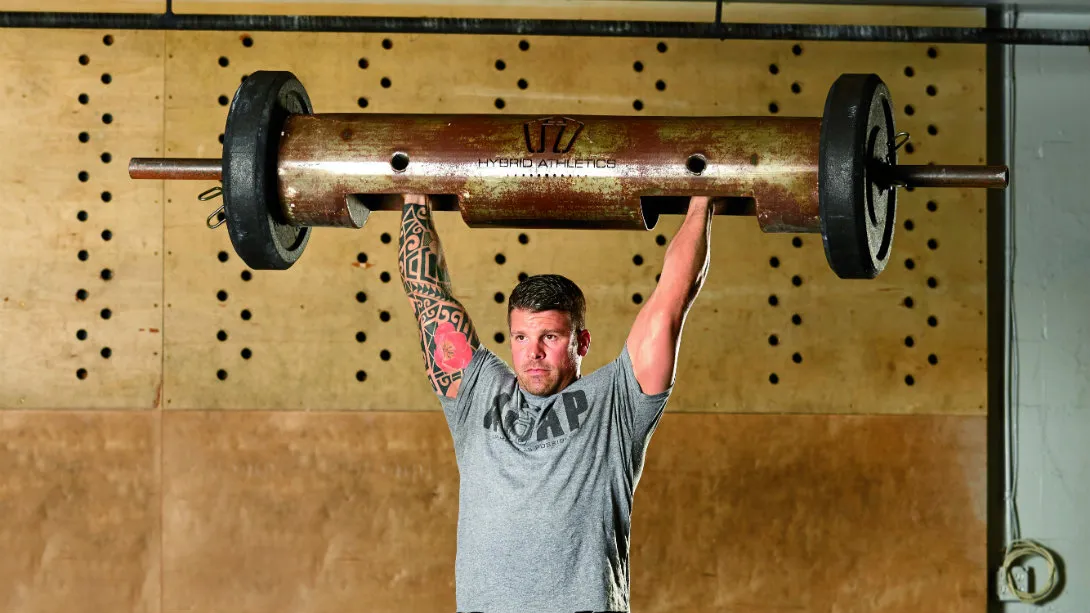
Every strength sport has an event that separates it from everything else. In strongman, the log press is that event.
It's not the most visually dramatic moment — the Atlas Stone usually claims that distinction. It's not the heaviest individual lift — the deadlift variations typically see bigger absolute numbers. But the log press is the event that consistently separates athletes who have genuinely trained strongman from athletes who have simply built general strength. The technique is specific, the implement is unforgiving, and the margin between efficient and inefficient movement is wider than in almost any other overhead pressing context.
This guide covers everything you need to know about the log press — the history of the implement, the technical demands, the coaching cues that make the difference between a successful rep and a missed attempt, and how to train it specifically for competition.
What Is the Log Press?
The log is a cylindrical implement — typically made from wood, steel, or a combination — with two parallel handles drilled through the center. The handles are positioned in a neutral grip orientation (palms facing each other), which is fundamentally different from the pronated grip of a standard barbell press.
Competition logs typically range from 10 to 12 inches in diameter, significantly thicker than a standard barbell. The diameter creates several specific challenges: the center of mass is further from the body than a barbell, the grip cannot be as precisely positioned, and the clean from the ground to the shoulder position requires a specific technique that has no equivalent in conventional barbell training.
Competition log weights at Strongman Corporation national events typically range from 200 to 350+ pounds for men's divisions, with women's logs ranging from 100 to 200+ pounds depending on weight class and event format. Events are programmed either as maximum reps at a set weight within a time limit, or as maximum weight for a single rep.
Why the Log Is Different From the Barbell
Understanding what makes the log press technically distinct from a barbell overhead press is the foundation for training it effectively.
The clean is a two-stage movement. The standard barbell clean takes the bar from the floor directly to the front rack position in one continuous movement. The log clean is inherently two-stage: first, the log is pulled from the ground into the lap (a position where the log rests across the thighs and lower abdomen), and then from the lap, a second explosive hip extension drives the log onto the shoulder/chest position for the press.
The lap position is the critical intermediate point. An athlete who cannot get the log efficiently into the lap position — who fumbles the transition from floor to lap — will burn energy and create instability before the press even begins. Training the log clean requires specific lap technique development that standard barbell cleans don't provide.
The neutral grip changes the pressing mechanics. With a barbell, your hands are pronated (palms down toward the floor), which positions the elbows in a specific relationship to the bar. With the log's neutral grip (palms facing each other), the elbows point forward rather than out to the sides. This changes the muscle recruitment pattern, the stability requirements at the shoulder, and the optimal path for the bar to travel overhead.
Athletes who try to press a log with the same technique as a standard military press typically find the movement awkward and inefficient. The neutral grip rewards a pressing path that's slightly different from the vertical barbell press — one that accommodates the different elbow position and the further-forward center of mass.
The thick diameter changes grip demands. A standard barbell is approximately 1.1 inches in diameter — a size that allows the fingers to close securely around it. A competition log at 10–12 inches in diameter cannot be gripped in the same way. Athletes grip the log handles rather than the log itself, but the overall hand position and contact with the implement is fundamentally different. This changes how force is transferred from the hands to the implement and requires specific adaptation for athletes accustomed to barbell-only training.
Log Press Technique — The Clean
Setup: Stand with feet hip-width apart, log between the feet. The log handles should be parallel to your stance — not angled. Grip the handles with a firm, closed grip. Hinge from the hips to reach the handles while maintaining a neutral spine.
Phase 1 — Floor to Lap: Drive through the floor, extending the hips and knees simultaneously. As the log rises to hip height, begin driving the hips forward to redirect the log toward the lap. The log should contact the lap (not the thighs — the lap, across the upper thigh and lower abdomen) at roughly the same time the hips reach full extension.
This phase requires specific practice with the log because the movement pattern — pulling the log into the body toward the lap rather than up and away — is counterintuitive for athletes trained primarily on barbells.
The lap position: With the log in the lap, establish your grip adjustment (if needed), take a quick breath, and prepare for the second phase. Some athletes use a brief pause in the lap position to reset; others transition immediately. The key is that you arrive in the lap position with control, not fighting to maintain balance.
Phase 2 — Lap to Shoulder: An explosive hip extension from the lap position drives the log upward onto the shoulder/upper chest rack position. This phase is the most explosive movement in the log clean and is where the most energy is generated for the press. The timing of the hip drive relative to the arm pull determines whether the log lands in a good rack position or sits awkwardly on the forearms.
The rack position: The log should sit on the upper chest and shoulder area with the elbows directly under the handles — not in front of them. A high, close rack position allows the most efficient pressing path. A low rack position with elbows forward or down is much harder to press from.
Log Press Technique — The Press
The dip: Most log press athletes use a leg drive (push-press) technique rather than strict overhead pressing. A brief dip — bending the knees slightly and then driving up explosively — generates momentum that carries the log through the sticking point of the press.
The dip should be controlled and short — roughly 4–6 inches. A deep dip creates an exaggerated forward lean that is harder to recover from and can stall the press at the bottom of the stroke.
The drive: The leg drive and the press initiate simultaneously. As the hips extend from the dip, the arms begin pressing the log upward. The goal is to use the leg drive to get the log moving past the sticking point so the upper body can lock it out.
The lockout: Arms fully extended overhead, log stable, body fully upright. The log is locked out when both arms are straight and the log is directly over the base of support. At competition, the judge is watching for the full lockout before counting the rep.
Breathing: Take a full breath before the clean, hold or take a quick breath in the lap, then take a full breath before the press. The press itself is performed with a held breath and a full brace — the same technique as any maximum-effort overhead movement.
Training the Log Press
Get on the actual log regularly. No barbell substitution fully replicates log press training. The two-stage clean, the neutral grip, the thick diameter — all of these require specific adaptation. If you're targeting competition log press performance, you need regular log time.
Train the clean as a separate skill. Many athletes train the press but neglect the clean, discovering at competition that their clean mechanics are underdeveloped. Spend dedicated sessions on lap technique specifically — getting the log from the ground into a good lap position consistently — before adding the full clean-and-press to your training.
Use touch-and-go lap reps for conditioning. Performing multiple reps in sequence — log clean to lap, brief pause, lap to rack, press, lower back to lap — builds the specific conditioning that max-reps-at-set-weight events demand. Single reps build strength; touch-and-go work builds the speed-endurance needed for rep events.
Supplement with neutral grip pressing. Swiss bar pressing, football bar pressing, and dumbell pressing in a neutral grip orientation all develop the specific shoulder mechanics used in the log press more specifically than standard barbell pressing. These accessory movements carry over to log performance and can be done in gyms without access to a log.
Watch the Log Press Live
Strongman Corporation Nationals at the North Texas Strength Expo in Mesquite features the log press as one of its signature competition events. National-level athletes will perform the two-stage clean and the pressed overhead at weights that define what the event looks like at its highest amateur level.
Watching the log press live shows you technique details that no video fully captures — the quality of the lap position, the timing of the hip drive, the difference between a clean that sets up the press efficiently and one that doesn't. Spectators at the expo who understand the technique are watching something qualitatively different from those who don't.

Watch the log press at the national stage — live at the North Texas Strength Expo.Get tickets at ntxstrengthexpo.com



Find Us On
.svg)

.svg)