


The Science of Peak Performance on Competition Day — What Your Body Is Doing and How to Use It
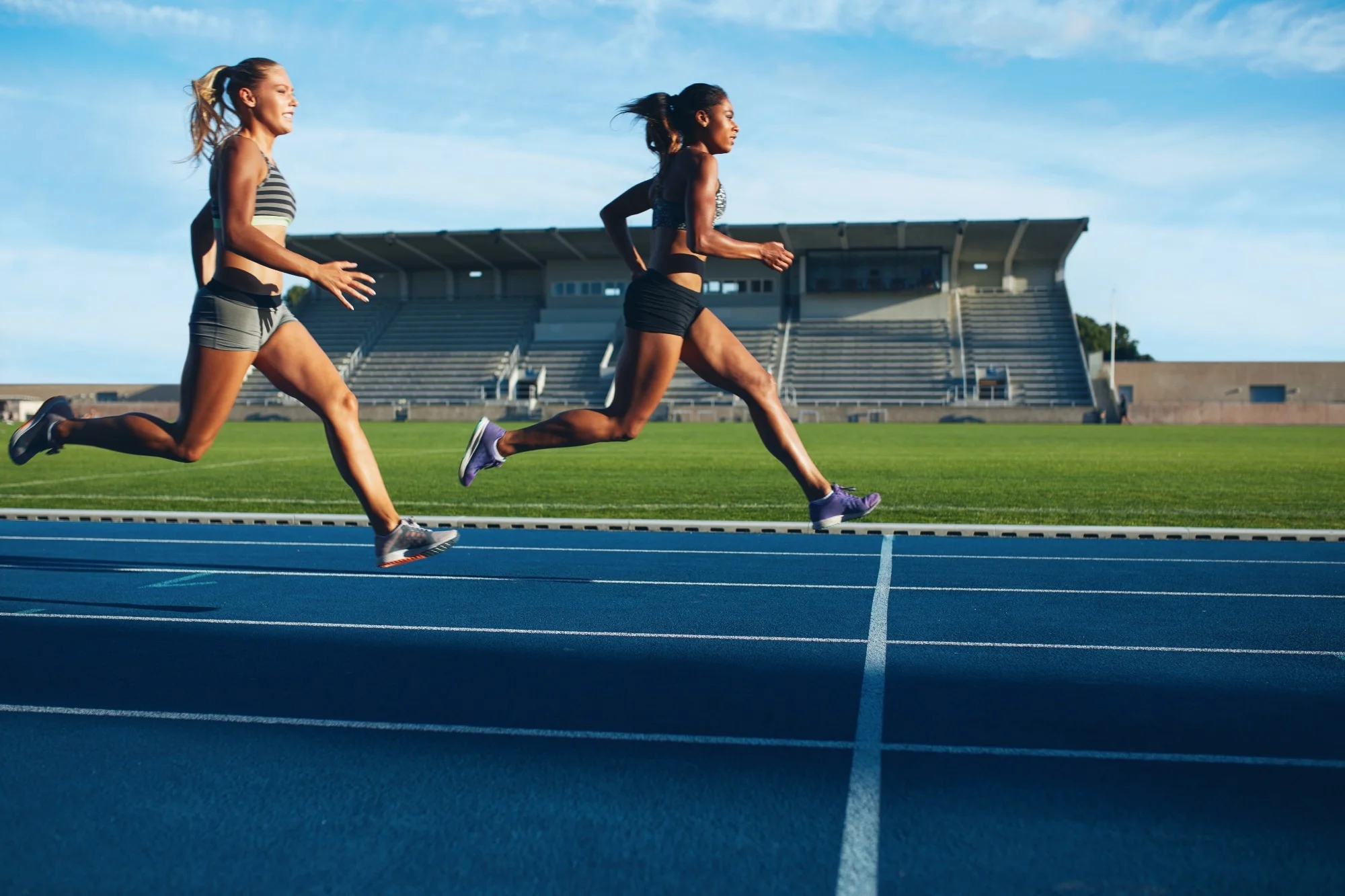
Most athletes prepare for competition day physically. They train the lifts, they practice the events, they manage their weight class. What most athletes don't prepare for is what their own body is going to do differently on competition day — the physiological changes that accompany genuine competitive performance and that can work for you or against you depending on how well you understand them.
This is the science of what happens to your body when you compete — and how to use it.
The Adrenaline Response — Why Everything Feels Different
The moment you enter a competition environment, your sympathetic nervous system activates. The hypothalamus signals the adrenal glands to release adrenaline (epinephrine) and noradrenaline (norepinephrine) into the bloodstream. This is the "fight-or-flight" response — and it produces immediate, measurable physiological changes:
Heart rate increases. Before you've done a single warm-up rep at an event like the North Texas Strength Expo, your resting heart rate may be 20–40 beats per minute higher than in your training gym. This isn't anxiety in the clinical sense — it's appropriate physiological preparation for high-intensity performance.
Blood glucose rises. Adrenaline stimulates glycogen breakdown in both the liver and muscles, releasing glucose into the bloodstream. This is your body pre-fueling the anticipated high-intensity effort.
Pain sensitivity decreases. The adrenaline response includes endorphin release and descending pain inhibition. Athletes in competition frequently note that efforts that would feel painful in training feel manageable or even easy — until the competition ends and the inhibition releases.
Force production capacity increases. This is the mechanism behind competition PRs. The combination of elevated arousal, reduced pain sensitivity, and enhanced neuromuscular activation can temporarily increase maximal force production by 5–15% above trained levels. This is why "competition strength" is a real phenomenon — not a myth, not a placebo effect, but a documented physiological response to competitive arousal.
The Problem With Adrenaline — And How to Manage It
The adrenaline response is also why competition day mistakes happen. The same physiological state that enables competition PRs also:
Degrades fine motor control. Under maximum sympathetic arousal, the fine motor precision required for technical events — a legal squat depth, a specific log press clean technique, a HYROX sled push body position — becomes harder to execute consistently. Athletes who haven't practiced their technique under arousal conditions arrive at competition to find their practiced movements feel different.
Distorts effort perception. The opener that felt light in warm-up doesn't feel light on the platform — the adrenaline fades slightly as the session progresses. Conversely, the opener that felt heavy in training may feel lighter in competition. Managing attempt selection around this variability is a core competition skill.
Compresses decision-making capacity. Under high sympathetic arousal, your brain's prefrontal cortex — responsible for complex decision-making — receives less blood flow than your limbic system. You're operating with a slightly reduced capacity for nuanced strategic thinking. Decisions about attempt changes, pacing strategy, and technical adjustments should be made before you're in the high-arousal competition state when possible.
Solution: Practice performing your competition technique under conditions that simulate competition arousal. Warm-up in front of observers. Compete in front of people in training. Build the neural pathways for technical execution that operate independently of your arousal state.
Neural Activation and Warm-Up Science
The purpose of your pre-competition warm-up is not to "loosen up" in the conventional sense — it's to progressively activate your central nervous system toward the arousal level optimal for maximum force production.
CNS activation follows an inverted-U curve. At very low arousal, force production is suboptimal. At moderate arousal, performance peaks. At very high arousal (anxiety, excessive stimulant use, panic), fine motor performance degrades even as gross force production remains elevated.
Your warm-up should be designed to bring you to the peak of this curve, not past it.
Practical implications:
Loading progressively — not jumping immediately to heavy weights — gives the nervous system time to activate the high-threshold motor units required for maximum effort. Athletes who attempt their first heavy warm-up set without adequate ramping often find the weight feels heavier than expected, which is a CNS activation problem rather than a strength problem.
Potentiation — the enhanced force production that follows a near-maximal effort — is a real mechanism. A heavy single or double at approximately 90% performed 8–12 minutes before a maximum effort produces a potentiation effect that can measurably increase the subsequent performance. This is the scientific basis for the common practice of hitting a heavy opener warm-up close to competition time.
Glucose, Glycogen, and Energy Systems
Powerlifting and strongman competition operates primarily on the phosphocreatine (PCr) energy system for individual efforts, with the glycolytic system supporting multi-event strongman competition across a full day.
The glycogen depletion concern is often overstated for single-lift powerlifting competition — a well-fueled athlete has sufficient glycogen for maximal efforts lasting 5–10 seconds regardless of how long the competition day runs.
The fatigue concern is real for multi-event strongman competition. Five or more events across a full competition day — particularly when events include loaded carries and conditioning-heavy loading medleys — does meaningfully deplete glycogen and accumulate neuromuscular fatigue. Strategic carbohydrate intake between events (simple carbohydrates that digest quickly) is a legitimate performance tool, not nutritional superstition.
For HYROX: the 8km of running plus eight demanding stations is a significant glycolytic and oxidative demand. The energy system requirements are more similar to a 45–90 minute endurance event than a strength competition. Pre-race carbohydrate availability and in-race pacing strategy are both critical performance variables.
Recovery Between Attempts
One of the most underappreciated aspects of competition day physiology is the recovery between attempts.
In powerlifting, the time between your attempts in a given lift can range from 5 to 20+ minutes depending on the session size. This is enough time for significant PCr resynthesis (complete phosphocreatine recovery occurs in 3–5 minutes), partial CNS recovery, and meaningful psychological reset.
In strongman, recovery between events is typically longer — sometimes 30+ minutes at national competition — giving athletes adequate time for partial glycogen recovery, hydration replacement, and thermal management.
The mistake most athletes make in these recovery windows is either doing too much (warming up extensively, pacing the warm-up area, generating unnecessary fatigue) or doing too little (going cold between attempts). The optimal approach: light movement to maintain activation, strategic nutrition and hydration, and deliberate mental preparation for the next attempt.
Putting It Together — Competing at the North Texas Strength Expo
The North Texas Strength Expo creates a physiological environment that amplifies everything described above. Five thousand fans. National-level athletes. Multiple world-class competitions happening simultaneously. The sympathetic activation you'll feel walking onto the expo competition floor is significantly higher than at a local meet — and with proper preparation, that elevation in arousal produces performances that exceed what any training session can generate.
Use the science. Prepare for the physiology. And come ready to perform at your ceiling.

Your best competition performance is waiting at the North Texas Strength Expo in Mesquite TX.Get registered at ntxstrengthexpo.com



Find Us On
.svg)

.svg)