


What Atlas Stones Look Like — A Visual Guide to Strongman's Most Iconic Implement
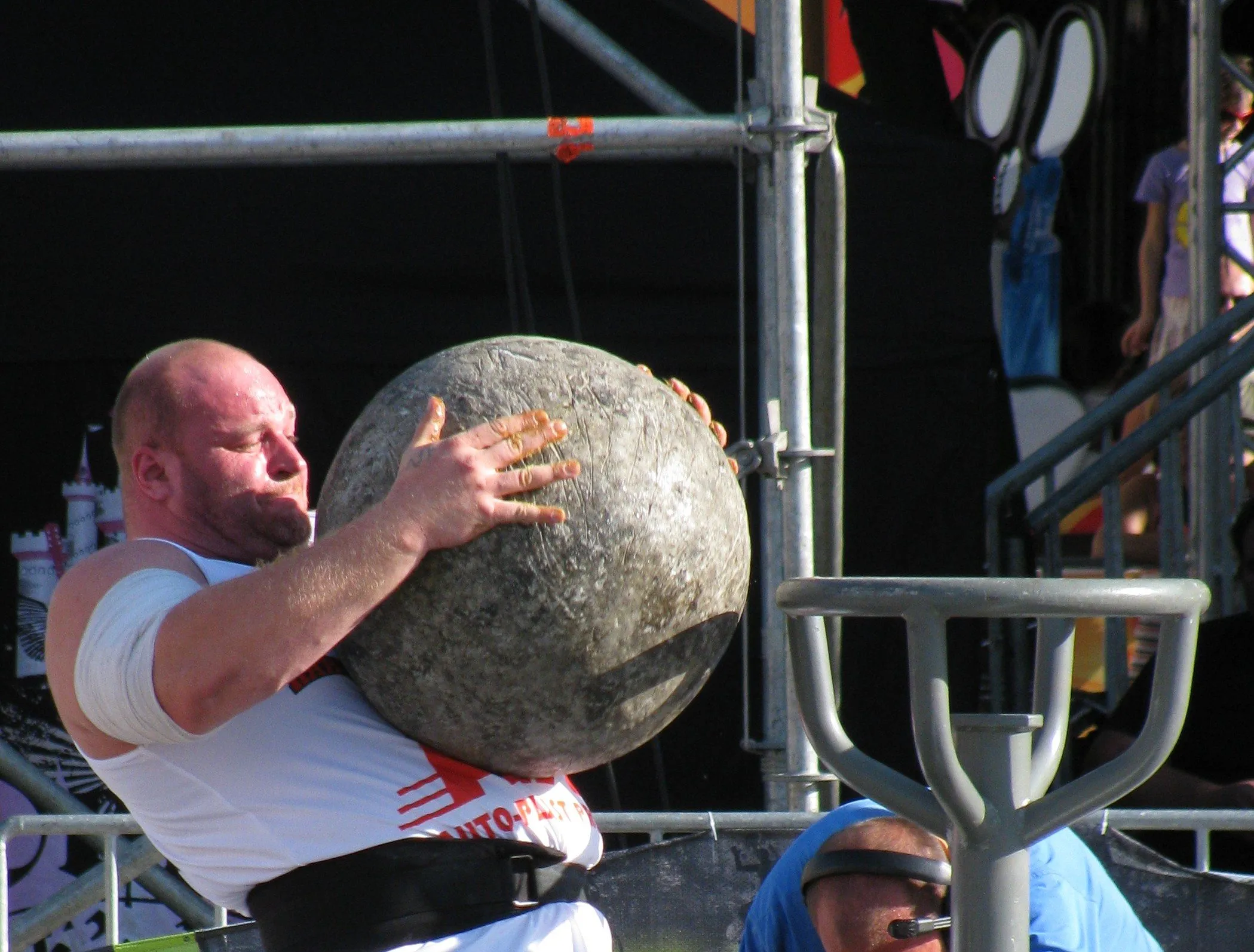
If you've never been to a strongman competition, you've probably seen Atlas Stones in highlights and wondered the same thing almost everyone wonders: are they as big as they look?
Yes. They are exactly as big as they look.
This guide gives you the visual reference to understand Atlas Stones before you see them in person at the North Texas Strength Expo in Mesquite, Texas — so when you walk up to the loading series for the first time, you know exactly what you're looking at.
What Atlas Stones Are Made Of
Atlas Stones are cast from concrete — typically a high-strength concrete mix that produces a dense, smooth, uniform sphere. The smoothness is intentional and essential: smooth surfaces are harder to grip, which is the entire challenge of the event.
Competition stones are typically cast in molds to achieve consistent diameter and shape. The surface is left smooth rather than textured — no handles, no grooves, no grip assistance. The athlete's only contact with the stone is friction between the stone's surface and their forearms and chest.
The color of competition Atlas Stones varies by manufacturer and set. Many competition sets are natural gray concrete. Some are painted in vivid colors — red, yellow, blue, black — both for visual distinction between weights in a loading series and for aesthetic appeal in televised and livestreamed events. When you see brightly colored stones at a competition like the North Texas Strength Expo, the color typically corresponds to a specific weight: the lightest stone in a series might be yellow, progressing to red for the heaviest.
Atlas Stone Sizes — What You're Actually Looking At
The physical size of Atlas Stones is what surprises most people first. The stones are measured by diameter, and competition weights span a significant range:
Lighter competition stones (100–160 lbs / 45–72 kg): Approximately 14–16 inches in diameter. About the size of a basketball, maybe slightly larger. Lighter than they look, but still requiring the full technique — the lap, the grip, the extension.
Mid-range competition stones (200–275 lbs / 90–125 kg): Approximately 18–20 inches in diameter. Larger than a basketball, smaller than a beach ball. At this size, you begin to appreciate why the athlete has to hug it to their chest — the stone is too large to grip conventionally.
Heavy competition stones (300–400+ lbs / 136–181+ kg): Approximately 20–22 inches in diameter. These stones, loaded at national competition level, are simultaneously more massive and smoother than anything in your general experience. The largest stones in a competition set are roughly the size of a small exercise ball — and weigh as much as a large refrigerator.
For reference: The heaviest stones at World's Strongest Man and Strongman Corporation Nationals regularly approach and exceed 400 pounds. Watching someone lift this from the ground, cradle it in their lap, and extend it onto a platform at shoulder height produces the specific crowd reaction that makes the Atlas Stone series the event that closes every major competition.
The Loading Platform — What the Stone Is Being Lifted Onto
In a loading series, the stone doesn't just have to be lifted — it has to be loaded onto a platform at a specific height. Understanding the platform helps you appreciate what the athlete is doing.
Competition platforms for Atlas Stone loading series are typically a series of raised surfaces (often oil drums, wooden platforms, or steel stands) at progressively increasing heights across the course. A standard five-stone series might present platforms at waist height, chest height, and finally shoulder height for the largest stone.
The height matters dramatically for technique: a stone loaded onto a waist-high platform can be rolled onto it from the lap. A stone loaded at shoulder height requires the athlete to extend the stone fully up the body before tipping it over the platform edge. The heaviest stone at the highest platform is the maximum demand event asks of the athlete.
What to Watch for When You See It Live
When you're at the North Texas Strength Expo watching the Atlas Stone loading series at Strongman Corporation Nationals, here's what to look for specifically:
The setup position: Watch how the athlete positions their feet relative to the stone and how low their hips drop to reach the stone. Athletes with tight hamstrings or poor hip mobility struggle to get their hips low enough for an efficient pickup.
The lap: The moment the stone transfers from ground level to the lap cradle is where most failed attempts happen. Watch whether the stone sits cleanly in the lap or whether the athlete is fighting to control it — this tells you a great deal about their technique.
The chest contact: As the stone extends from the lap to the platform, elite athletes maintain constant contact between the stone and their chest throughout the movement. Athletes who lose chest contact mid-extension lose the friction that keeps the stone from rolling off their arms.
The final extension: At the top of the movement, the athlete's body is fully extended — hips through, chest up, arms driving the stone over the platform edge. This is the most photographed moment in strongman for good reason: the full extension under maximum load, with the stone at shoulder height, is visually extraordinary.
See Atlas Stones Live at the North Texas Strength Expo
The Strongman Corporation Nationals Atlas Stone loading series at the North Texas Strength Expo in Mesquite is where everything in this guide becomes real. The actual size. The actual texture. The actual scale relative to the athlete. The actual sound when the stone hits the platform.
No photograph or video fully prepares you for standing next to a competition Atlas Stone set. Come see it.

See Atlas Stones at the national level — live at the North Texas Strength Expo in Mesquite TX.Get your tickets at ntxstrengthexpo.com



Find Us On
.svg)

.svg)