


What Is Arm Lifting? The Underground Strength Sport That Stops Everyone in Their Tracks
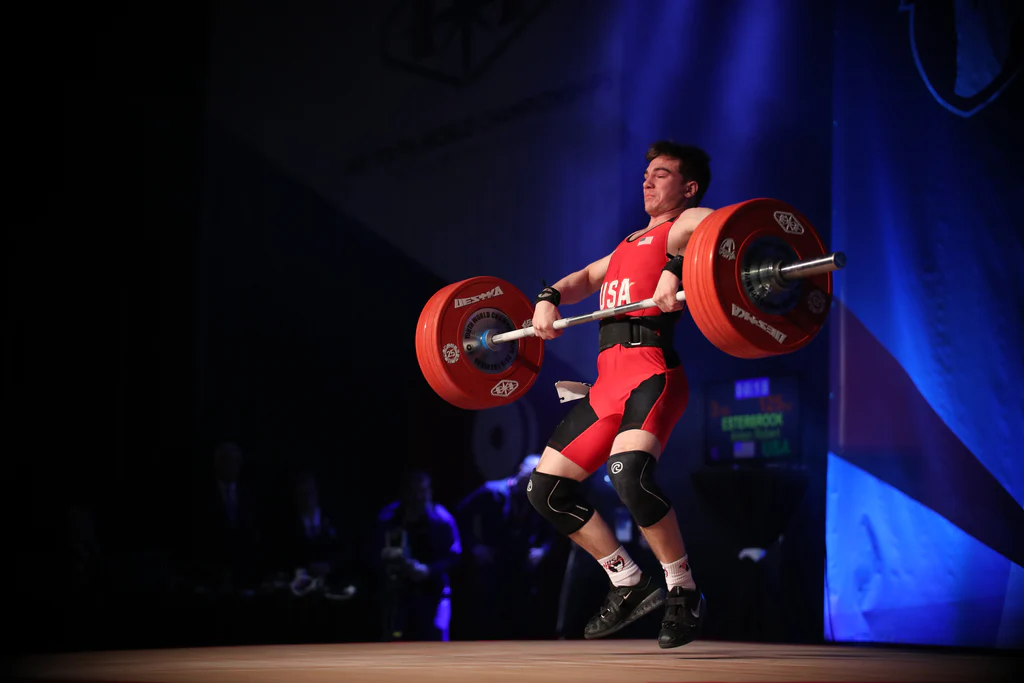
Every year at the North Texas Strength Expo, the same thing happens at the arm lifting competition area.
Someone walks past on their way to watch strongman or powerlifting. They glance over. They see a person standing in front of a loaded barbell, chalking up their single hand with deliberate attention. They stop. They watch the athlete grip the bar with one hand — just one — and pull hundreds of pounds off the floor.
They don't leave for a while.
Arm lifting is strength sports' most underexplored discipline. It lacks the mainstream visibility of powerlifting or the explosion of HYROX. But in terms of raw spectacle, historical depth, and the kind of physical extremity that stops people mid-stride — it belongs on any honest list of the most compelling competitive sports available to watch live.
This is everything you need to know about arm lifting: what it is, the events it includes, its history in strength sports, and what makes it worth a significant portion of your attention at the North Texas Strength Expo in Mesquite, Texas.
What Is Arm Lifting?
Arm lifting is a competitive strength sport that centers on grip-intensive events performed with one arm. The defining characteristic is the isolation — unlike powerlifting (both hands on a barbell) or strongman (both hands for most events), arm lifting removes the mechanical advantage of bilateral symmetry and tests what a single hand, wrist, and arm can do.
The events within arm lifting test different types of grip strength, each requiring specific physical development that doesn't transfer automatically from other strength training:
The One-Hand Deadlift is the signature event and the one that produces the most dramatic spectator reaction. A barbell is loaded with plates and positioned on the floor. The athlete grips it with one hand — no straps, no hooks, no assistance — and pulls it to a standing lockout position. One hand. Maximum weight. No help.
At competitive levels, one-hand deadlift performances range from 300+ pounds for newer competitors to 500+ pounds at the elite end. Watching someone pull 400 pounds off the floor with a single hand, from a dead stop, is an experience that recalibrates what you thought was possible.
The Rolling Thunder / Revolving Handle Deadlift uses a specialized handle that rotates freely on the axle — removing any ability to wrap the fingers into a secure grip. The only grip available is pure crushing pressure between the palm and fingers against the spinning handle. This event tests crushing grip strength more specifically than any other standardized implement.
The Rolling Thunder has been used for world championship grip competitions since 2000, with records tracked and certified by IronMind — one of the most respected institutions in grip sports.
The Hub Lift involves gripping a standard weight plate by its center hub — the raised center section — using only the fingers and thumb in a pinch grip. The challenge is that the hub is not designed to be held this way, and the grip required tests the pinch strength that most athletes have never specifically developed.
Block Weight Lifting uses specially manufactured blocks with a specific shape that must be lifted by the fingers. Standardized block weights allow direct comparison between athletes and have become one of the recognized benchmarks of elite grip competition.
Pinch Grip Events test the strength generated between the thumb and the remaining fingers without wrapping the hand around anything. Multiple configurations exist — two-plate pinch, single plate, and narrower implements — each testing slightly different aspects of the thumb-to-finger force.
The History of Arm Lifting
Arm lifting doesn't have an origin story — it has roots so deep in human strength tradition that pinpointing a beginning is impossible.
Human beings have been testing one-hand strength as a demonstration of physical capability for centuries. Old-time strongmen performing at fairs and circuses across Europe and America in the 19th and early 20th centuries regularly included one-hand feats in their acts — stone lifts, barbell pulls, and grip challenges that audiences could test against their own strength.
Hermann Goerner, the German strongman active in the 1920s, reportedly performed unofficial one-hand deadlifts of over 700 pounds — numbers that were widely discussed but difficult to certify by the standards of the time. His performances established the one-hand deadlift as a serious test of elite strength rather than a novelty.
The organized grip sports movement began in earnest with IronMind in the early 1990s. IronMind introduced the Captains of Crush gripper series — a graduated series of closing grippers that became one of the most universally recognized strength benchmarks in the world. Their first IronMind Rolling Thunder World Championships in 2000 marked the formalization of standardized grip competition with tracked world records.
The development of the blob (a half of a York dumbbell head used for pinch grip), the Hub Lift as a standardized event, and block weight competitions all happened within this organized grip sports ecosystem — creating a full competitive structure from what had previously been informal demonstrations.
Today, arm lifting competition exists at local, national, and international levels, with standardized implements and certified record books maintained by IronMind and other grip sports organizations. The athletes at the North Texas Strength Expo represent this tradition at the competitive level — carrying forward a physical testing tradition that predates organized sport.
What Makes Arm Lifting Different to Watch
The scale is deceptive. Athletes at an arm lifting competition don't look like strongman superheavyweights or NFL linemen. Many competitive grip athletes are leaner and less visually imposing than the strength sports audience's default expectations. Then they grip the bar and pull 400 pounds with one hand. The dissonance between appearance and performance is one of the most startling aspects of the sport for first-time observers.
The effort is completely visible. In arm lifting, the limiting factor is immediately apparent — it's the grip. You can see the forearm muscles contracting, the tendons standing out, the knuckles whitening. When an attempt is near the athlete's maximum, the visible strain in a single hand is one of the most primal physical displays in sports.
The competition culture is completely accessible. Experienced arm lifting athletes are among the most approachable in any strength discipline. The community is small enough that veterans know newcomers by name quickly, and the culture of mentorship that developed in specialty grip communities carries to competition events. First-time spectators who approach the platform and start asking questions almost always leave with more information than they requested.
The concentration required is extreme. In events like the Rolling Thunder revolving handle deadlift, there is no technique that compensates for insufficient grip strength — the handle simply spins away if your crush isn't sufficient. Watching an athlete approach that implement with the deliberate preparation of a maximum attempt creates a focused intensity that's different from any other event at the expo.
Why Arm Lifting at the North Texas Strength Expo Matters
The North Texas Strength Expo gives arm lifting something it rarely gets: a national-caliber stage in front of thousands of people who didn't specifically come to watch it.
The expo environment exposes the sport to the broadest possible audience — powerlifters, HYROX athletes, strongman fans, DFW families — most of whom have never considered competitive grip sports as something they'd be interested in. What happens consistently is that they walk past, stop, and discover a competition that's more compelling than they expected.
That discovery moment is how arm lifting builds its audience. Not through mass marketing, but through proximity — through putting the sport in front of people who would never have sought it out and letting the performance speak for itself.

Discover arm lifting live at the North Texas Strength Expo — it'll stop you in your tracks.Get your tickets at ntxstrengthexpo.com


Find Us On
.svg)

.svg)