


What to Wear for HYROX — The Complete Gear and Shoes Guide for Race Day
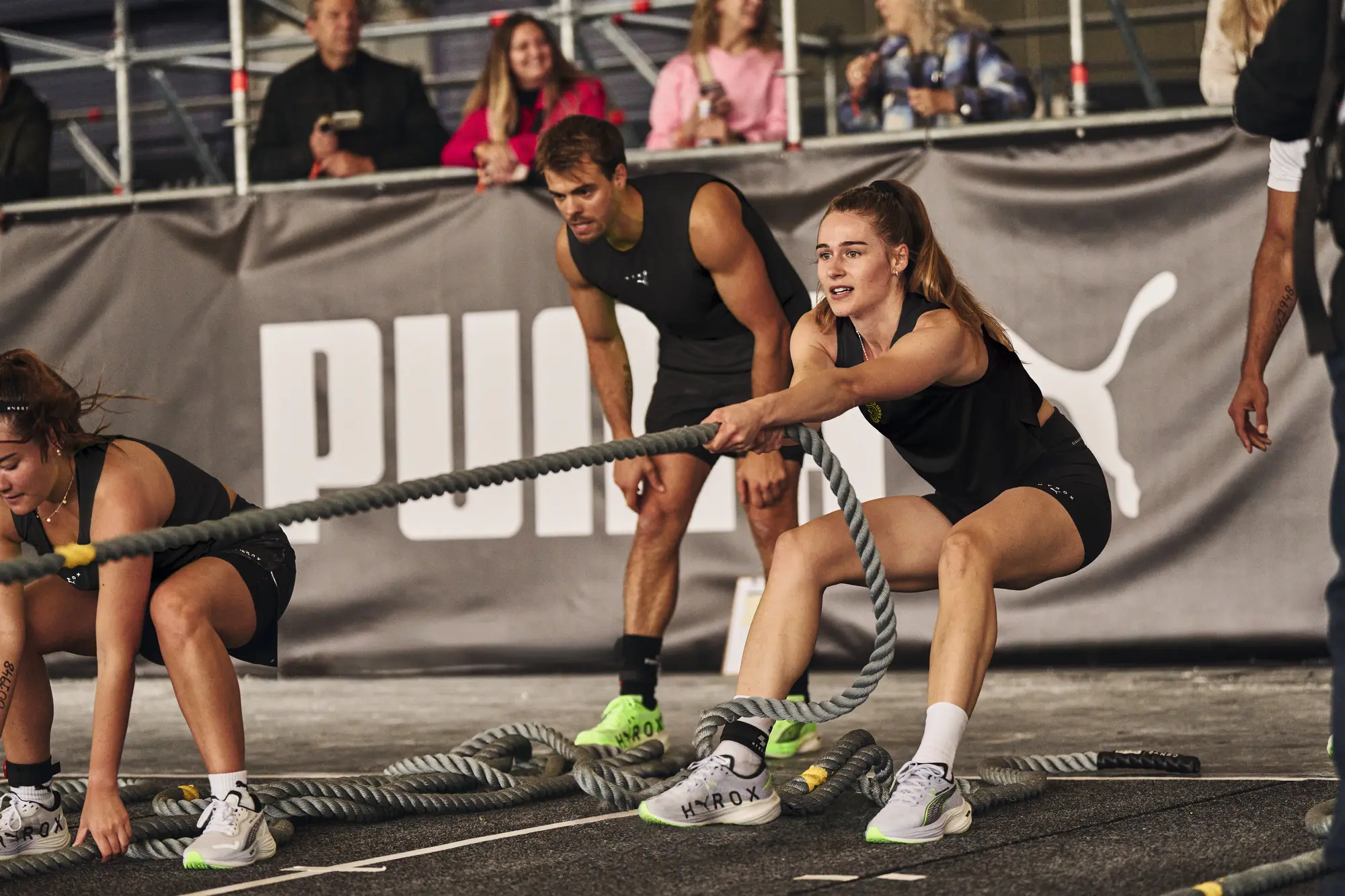
HYROX is a hybrid race — 8 kilometers of running plus eight functional workout stations. That combination means the gear you show up in needs to serve two very different physical demands: running efficiency and functional training performance. Get the gear wrong and you're fighting your kit at every transition.
This guide covers everything you need to wear for a HYROX race — shoes, clothing, accessories, and the optional extras that competitive athletes use to manage comfort and performance across a race that lasts anywhere from 55 minutes to 2+ hours.
The Most Important Decision: HYROX Shoes
Your HYROX shoes determine more about your race experience than any other gear choice. The split demands of the sport — sustained running across 8 separate 1km efforts and physical station work including sled pushing, farmer's carries, and wall balls — mean that no single shoe is perfect for everything. But the right choice for your priorities can significantly improve your performance.
The main categories of HYROX shoes:
Running shoes with some support: The most common choice for Open division athletes, especially first-timers. A well-cushioned, stable running shoe like a Brooks Ghost, ASICS Gel-Nimbus, or Saucony Ride provides the running comfort needed for 8km and adequate stability for the station work. The tradeoff is that standard running shoes are not designed for the lateral and pushing demands of the sled — you may feel some instability on the sled push specifically.
Training shoes with good running capacity: A shoe like the Nike Metcon, Reebok Nano, or New Balance Minimus Training provides better stability and ground feel for the station work — particularly the sled push where heel drive and foot-to-floor connection matters. The tradeoff is slightly less running cushioning over 8km. Athletes who find the station work more limiting than the running often prefer this category.
Hybrid/race-specific shoes: The most competitive HYROX athletes increasingly use shoes specifically designed or selected for the hybrid format. Brands including PUMA (an official HYROX partner), On Running, and Hoka have developed shoes that attempt to bridge the running and training demands. The PUMA x HYROX Fuse and similar purpose-built options are worth considering for athletes who race regularly.
Carbon fiber "super shoes": The question of whether carbon-plated running shoes benefit HYROX performance has been debated extensively in the community. Carbon shoes optimize running efficiency through energy return — and since HYROX involves significant running, the benefit is real for the running segments. However, carbon shoes are generally poor choices for the sled push and other station work due to their instability on pushing surfaces. Some athletes carry a second pair of shoes and change into training shoes for the sled specifically — though the transition time cost may offset the benefit.
Recommendation for most athletes: A stable training shoe with adequate running cushioning (Metcon, Nano, or equivalent) is the most practical choice for the broadest range of athletes and divisions. Prioritize fit and break-in above all other shoe factors — race day is not the time to try new footwear.
Clothing: Function Over Everything
HYROX is a sweaty race. The combination of running, sled work, carries, and lunges in an indoor heated venue means you will generate significant body heat and sweat. Your clothing choices should prioritize moisture management, freedom of movement, and thermal regulation.
Tops: Moisture-wicking performance fabric is non-negotiable. Cotton will be soaked and heavy within the first two stations. A form-fitting or semi-fitted performance top that doesn't restrict shoulder movement (for SkiErg and wall balls) and doesn't bunch during running is the practical standard. Many athletes wear compression short-sleeve or sleeveless tops that stay in place throughout the race.
Bottoms: Compression shorts or performance running shorts. The key criteria: no restriction of hip mobility (critical for lunges and burpees), no fabric bunching between the legs during running, and no waistband that digs in under the sandbag lunges. Shorts that hit mid-thigh work well for most athletes.
Compression gear: Some athletes wear calf compression sleeves for the running segments. Compression can improve running economy marginally and reduce calf soreness in longer races. If you've trained with calf compression and found it beneficial, race with it. Don't introduce compression for the first time on race day.
Socks: Low-cut, moisture-wicking performance socks. Standard running socks work well. Avoid long socks that might slip down during the running segments and create distraction.
Accessories and Optional Gear
Gloves: Grip gloves are used by some athletes specifically for the rowing and farmer's carry stations to manage blister risk during longer efforts. They're more common in Doubles and Relay formats where total station work per athlete is higher. For Open individual racing at normal distances, gloves are personal preference — most athletes don't use them.
Wrist wraps: Some athletes with wrist discomfort use light wrist wraps for the sled push and wall ball stations. Not standard equipment, but worth knowing as an option if you have a history of wrist issues under load.
Hydration: HYROX races provide water stations at specific points on the course. For most athletes in the sub-90-minute Open range, the on-course water is sufficient. For longer races or athletes who sweat heavily, some events allow personal hydration — check the specific race rules for the North Texas Strength Expo HYROX event. Hydration before the race and a deliberate pre-race electrolyte protocol is more impactful than in-race hydration management for most athletes.
Race belt/number display: HYROX provides race numbers that must be worn visibly during the race. Know how your race number attaches and confirm your kit accommodates it before race day.
What Not to Wear
Cotton anything. Not a top, not socks, not shorts. Cotton absorbs sweat and stays wet and heavy. Performance fabric only.
New shoes on race day. Broken-in shoes that you know and trust. Whatever shoes you choose should have at least several training sessions on them before you race in them.
Excessive layers. You will be warm within the first 1km. Don't start the race overdressed. A minimal kit that you can work in across the full race duration beats layering for the warm-up and overheating by Station 3.
Jewelry or accessories that could catch on equipment. Long necklaces, large earrings, or bracelets that could snag during rowing or carries should be left behind.
Race Your Best at the North Texas Strength Expo
The North Texas Strength Expo in Mesquite, Texas features HYROX Open, Pro, Doubles, and Relay divisions — the full competitive range for athletes at every level. Arrive at your race start time wearing the right kit, having tested every element of your gear in training, and ready to perform across all eight stations and eight runs.

Geared up and ready. The North Texas Strength Expo HYROX race is waiting.Register at ntxstrengthexpo.com



Find Us On
.svg)

.svg)